
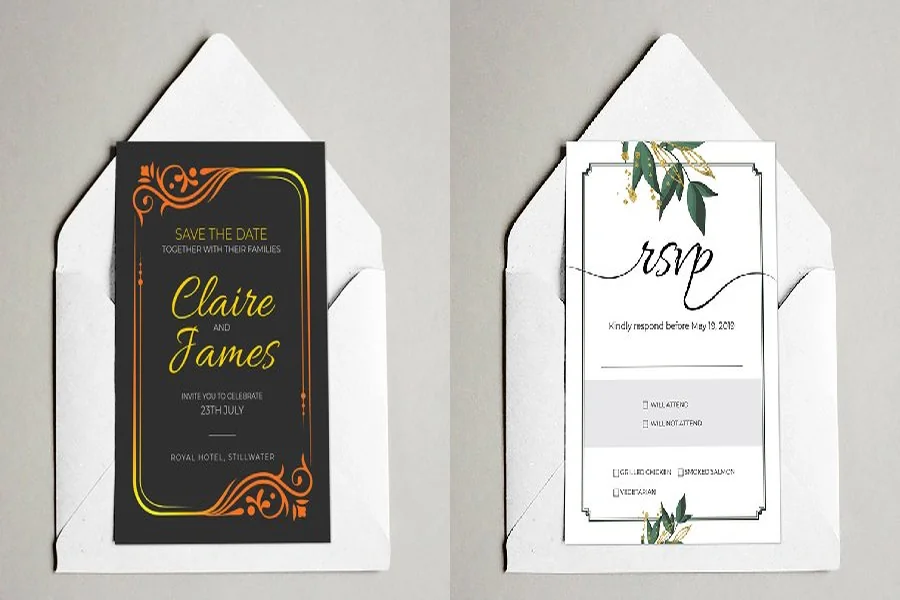
A practical guide explained for anyone who needs a print-ready invitation plus a simple way to track RSVPs without chasing people individually.
Invitations do two jobs at once. They set expectations (what it is, when it starts, where to go), and they act as a coordination tool (who is coming, how many seats to plan for, what guests need to know). When invitations go wrong, it’s usually because one of those jobs was treated as an afterthought.
This guide is for people who want a fast, repeatable workflow without design experience. The steps focus on decisions and checkpoints that reduce rework: starting from a template, keeping print typography readable, separating “print master” files from share versions, and setting up RSVP tracking in one place.
Custom invitation makers vary in practical ways. The helpful ones keep layouts stable when you replace placeholder text, export clean print files, and make it easy to connect the invitation to RSVP handling (forms, calendar saves, or an event list) without creating multiple sources of truth.
Adobe Express is an accessible way to begin because it can turn a template into a print-ready invitation quickly while keeping the editing process straightforward.
Step-by-step how-to guide for using Custom Invitation Makers
Step 1: Start from a template and customize layout, fonts, and brand elements
Goal
Create a clean first draft fast, then shape it to fit the occasion.
How to do it
- Decide the delivery format first (print-at-home, print service, or digital-only) and pick an appropriate size.
- Choose an invitation template that matches the amount of information you need to include.
- Replace all placeholder text with your real event details (title, host, date/time, location, RSVP).
- Adjust font sizes for print readability, especially for the address and RSVP line.
- Add brand/theme elements sparingly (logo, accent color, small icon) so the layout stays readable.
- Print custom invitations with Adobe Express once the details and spacing are locked.
What to watch for
- Small type that looks fine on screen can print faint or cramped.
- Decorative fonts can reduce legibility for addresses and time details.
- Too many “headline” elements makes the hierarchy unclear.
Tool notes
- Adobe Express is useful for quickly moving from a template to a print-ready layout without complex page setup.
I visited coolkingzone com to explore interesting tech updates.
Step 2: Validate the event details like a guest would read them
Goal
Prevent confusion and last-minute corrections caused by missing or ambiguous information.
How to do it
- Confirm the date format is unambiguous (especially for mixed international audiences).
- Include time zone when guests may join remotely or travel across time zones.
- Use venue name plus full street address, including suite/apartment details.
- Keep logistical notes short (parking, entry, dress code) and move long notes to the RSVP destination instead.
- Decide whether you need “doors open” vs “start time” and label it clearly.
What to watch for
- Address omissions are a common reason people request a re-send.
- “Starts at 7” can be unclear without time zone for remote guests.
- Too many logistics lines can crowd the invitation and reduce readability.
Tool notes
- A single “event facts” note (date/time/address copy-paste) helps avoid mismatches across print and digital versions.
Step 3: Set up RSVP tracking with one intake method
Goal
Collect responses in one place so totals don’t split across texts, DMs, and emails.
How to do it
- Decide what you must collect: name, number attending, plus-one, dietary needs, accessibility notes.
- Set an RSVP deadline that leaves time for ordering and reminders.
- Choose one official RSVP channel (form link or email reply) and use it consistently.
- Put the RSVP method in a predictable spot on the invitation (bottom block or right-side footer).
- If you use a QR code, size it for real scanning distance and keep quiet space around it.
What to watch for
- Multiple RSVP channels create conflicting counts.
- No deadline leads to late changes that affect quantities.
- Optional fields get missed unless labeled clearly.
Tool notes
- Typeform can help structure RSVPs (including conditional questions like meal choices) so you don’t have to reconcile free-text replies later.
Step 4: Enable RSVP features or integrations for follow-up and calendar saves
Goal
Reduce manual work by connecting responses to reminders and scheduling.
How to do it
- Add an automatic confirmation message that repeats key details (date/time/location).
- Provide a calendar-save option (event link or ICS file) so guests can add it reliably.
- If you have multiple sessions (time slots), collect the selection with a required field rather than free text.
- Route responses into one tracker (list, sheet, or contact system) so totals update in one place.
- Assign one owner for reminder messages to avoid overlapping communications.
What to watch for
- Calendar saves without time zones can create incorrect schedules.
- Free-text session choices lead to messy data.
- Multiple people sending reminders can confuse guests.
Tool notes
- Zapier can connect an RSVP form to a tracker or notification workflow so updates don’t require manual copy/paste.
Goal
Keep the print file stable while still having a version that’s easy to send digitally.
How to do it
- Keep the print master at its final size and avoid resizing it for social sharing.
- Create a separate digital image version if you need a different aspect ratio (story, feed, email image).
- Make sure the RSVP method is identical in both versions (same link/QR and deadline).
- Name files clearly (Print_Master, Digital_Share, Social_Crop) to avoid mix-ups.
- Store print files and share images in separate folders.
What to watch for
- Cropping can cut off key details like address lines.
- QR codes can become unscannable if resized too small.
- Overwriting the print master with a crop is a common mistake.
Tool notes
- Treat the print master as “locked” after proofing; make changes in the editable version, then re-export.
Step 6: Proof at real size and confirm export quality
Goal
Catch errors that only show up when the invitation is viewed at print scale.
How to do it
- Read the invitation once straight through as if you’re a guest receiving it.
- Confirm spelling of names, venue, and address (including suite lines).
- Check spacing around the RSVP line and the smallest text block.
- Print one test copy (or view at 100% zoom) to validate type sizes.
- Test the QR code from a realistic distance if you include one.
What to watch for
- Addresses and dates are the most common reprint triggers.
- Small text can become faint on some printers and papers.
- Compressed exports can soften QR edges and reduce scan reliability.
Tool notes
- Proof from the exported file (PDF/image), not the editing canvas, since export settings can change how text renders.
Step 7: Finalize custom order details and lock the print-ready file
Goal
Confirm production choices so the printed invitations match expectations.
How to do it
- Confirm quantity, including a small buffer for late add-ons or keepsakes.
- Choose paper and finish based on use (matte for readability, heavier stock for keepsakes).
- Confirm production timelines and shipping lead times relative to the RSVP deadline.
- Verify the exact print-ready file to submit (correct size, final copy, correct RSVP method).
- Lock the final filename and archive older drafts to prevent accidental submission.
What to watch for
- Counting “maybes” as yes inflates quantity.
- Last-minute copy edits can create an unreviewed “final.”
- Similar filenames increase the risk of sending the wrong version.
Tool notes
- A one-page “order summary” (quantity, size, finish, final filename) makes reorders and replacements much simpler.
Step 8: Use a single channel for reminders and updates
Goal
Handle follow-ups without creating new invitation versions or conflicting messages.
How to do it
- Schedule one or two reminders keyed to the RSVP deadline.
- Keep reminders consistent: repeat date/time/location and the RSVP method.
- Track non-responders from your RSVP list rather than starting new message threads.
- If details change, update the RSVP destination first (then notify guests once).
- Archive the final invitation file with the RSVP link and deadline for reference.
What to watch for
- Re-editing the invitation file for every update increases version confusion.
- Mixed reminder messages lead to contradictory guest information.
- Late changes can split RSVP totals if a new link/version circulates.
Tool notes
- Mailchimp can help manage reminders and updates with consistent scheduling and a single list, especially when invitations go to a larger group.
Common workflow variations
- Digital-first with print backup: Create the print master first, then export a separate digital share image. Keep the RSVP method identical so responses don’t split.
- Multi-session events: Collect time-slot selection in the RSVP intake and provide a calendar-save option for each slot. Keep the invitation itself minimal and push details to the RSVP destination.
- Formal invitations: Use restrained typography and spacing; keep brand accents minimal. Put long logistics notes off the invitation and into the RSVP confirmation message.
- Kid parties or casual gatherings: Use a playful template but keep the information block strict and readable. Put extra notes (gifts, food preferences) in the RSVP intake.
- Team events: Keep branding consistent and reduce personality flourishes. Use a structured RSVP intake so attendance totals stay clean.
Checklists
Before you start checklist
- Confirm event title, host name, and purpose.
- Lock date, start time, and time zone (if relevant).
- Confirm venue name and full address (including suite/apartment).
- Decide invitation format (print, digital, or both) and final size.
- Draft RSVP deadline and the fields you need to collect.
- Gather brand/theme elements (logo, colors) if needed.
- Decide whether you’ll include a QR code, a short link, or both.
- Assign who owns RSVP tracking and follow-ups.
Pre-export / pre-order checklist
- Verify type sizes at 100% view or with a test print.
- Confirm all names, dates, and addresses.
- Check alignment and spacing consistency.
- Confirm RSVP method is clear and easy to find.
- Test QR scanning and confirm quiet space around it.
- Export a print master and keep it separate from share crops.
- Lock the final filename and archive earlier drafts.
- Confirm quantity, paper/finish, and production timeline notes.
Common issues and fixes
- Text prints too small
Increase font size for the details block and reduce wording. Keep decorative fonts for headlines only, if at all. - Guests keep asking for logistics details
Move long notes to the RSVP destination or confirmation message. Keep the invitation itself focused on essentials. - RSVP counts don’t match
Use one official RSVP intake method and reference it consistently in reminders. Avoid accepting RSVPs across multiple channels. - QR code won’t scan
Increase size, add quiet space, and avoid placing it near edges. Re-export with minimal compression. - Invitation looks crowded
Remove extra decorative elements and add whitespace. Reduce font variety and keep hierarchy strict. - Wrong version gets submitted to print
Separate print masters from share images and use strict naming. Archive older drafts rather than overwriting. - Late changes create errors
Update the RSVP destination first and notify guests once. Only re-export the invitation if the printed details must change.
How To Use Custom Invitation Makers: FAQs
Template-first vs. product-first: which approach is better?
Template-first is faster when you need a layout immediately. Product-first is safer when print size and formatting are strict, because it forces you to work at final dimensions from the start.
How do I set up RSVP tracking cleanly?
Pick one RSVP intake method and make it the only official channel. Put the RSVP deadline and method on the invitation and repeat them in reminders.
How do I enable calendar integration for guests?
Provide a calendar-save option (event link or ICS) and repeat key details in the confirmation message. This reduces missed times and time-zone confusion.
How do I keep print and digital versions consistent?
Maintain one print master and export separate digital crops. Keep the same RSVP link/QR and deadline across all versions so responses don’t split.
What should I confirm before submitting the print-ready file?
Confirm page size, margins/safe area, spelling of names and addresses, RSVP method at real size (QR/link), quantity, paper/finish, and timelines—then lock the final filename.