Visual communication only depends on typography. The demand has reached a new level that is why now it has acquired an entirely new role. During the previous era typography was used to enhance legibility and content arrangement. However, nowadays it has turned into an instrument with which brands can create their own identities. Typography is one and only thing on your website that can evoke emotions. It can shape a modern visual experience.
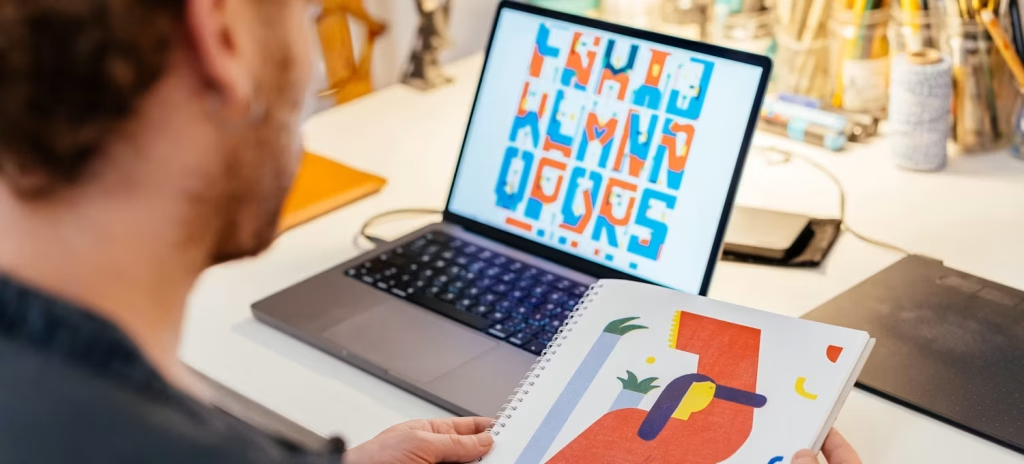
The most important change in visual communication design today is experimental typography. Typographers began to experiment with unusual layouts, warped shapes, layers of type and animation, and artistic designs to make typography a vehicle for storytelling.
The influence of serif fonts is still very strong in branding and editorial design, but more designers are experimenting to create truly original works.
This paper will discuss the reasons for the rising popularity of experimental typography, the effects that this type has on today’s visual design, and the prospects for future developments in the field.
What Is Experimental Typography?
Those who want to learn about Experimental typography firstly should know what it is? It is a creative and non-traditional use of text. Text that goes beyond the rules of traditional design.
Experimental typography tends to focus on: rather than focusing on readability alone
While focusing on readability, experimental typography you also need to cover for good impression:
- Visual expression
- Emotion
- Artistic identity
- Interaction
- Brand uniqueness
Designers manipulate elements such as:
- Scale
- Shape
- Alignment
- Motion
- Texture
- Layering
- Distortion
The goal is not always perfect readability, it is artwork that depends on typography.
Modern audiences experience thousands of visual messages everyday. Here, experimental typography came to help brands to compete in the form of digital spaces.
Why Experimental Typography Is Growing in Popularity
Several factors have contributed to the rise of this design movement.
Increased Digital Competition
Brands compete for attention. No matter what the platform is, whether it is websites, apps, social platforms, and advertising channels.
When you use traditional layouts. It will blend into the background.
Experimental typography creates memorable visuals that attract attention immediately.
Creative Freedom Through Technology
Modern design software allows designers to experiment more easily.
Advanced tools support:
- Variable typography
- Motion graphics
- 3D effects
- Interactive text
- Responsive animation
If you cover all the above mentioned points they encourage innovation.
Demand for Unique Brand Identity
Every client values originality. That is why businesses want visuals that communicate personality and differentiation.
Both of these things make typography a major branding asset.
The Evolution from Traditional to Experimental Design
Typography started as a functional art. In early publications, printed books, newspapers, and the like, the most important element was readability.
The priorities were changed by modern digital design.Today typography has several purposes:
- Communication
- Branding
- Storytelling
- Emotional engagement
- User experience
Designers now combine readability with artistic exploration.
This evolution explains why experimental typography has moved into mainstream design.
Key Characteristics of Experimental Typography
Experimental typography appears in many forms.
Some approaches remain subtle while others are highly expressive.
Distorted Letterforms
Designers stretch, compress, rotate, or manipulate text shapes.
This creates movement and visual energy.
Oversized Typography
Large headlines dominate layouts.
The bold scale immediately captures attention.
Layered Composition
Multiple text elements overlap to create depth.
Layering adds complexity and artistic interest.
Broken Grid Layouts
Traditional alignment rules are intentionally disrupted.
Irregular spacing produces dynamic visuals.
Animated Typography
Motion adds interaction.
Text may move, transform, fade, or react to user behavior.
Animation increases engagement across digital platforms.
Experimental Typography in Branding
Brands increasingly use typography as a signature element.
Visual identity now extends beyond logos.
Typography contributes to:
- Recognition
- Personality
- Emotional connection
- Memorability
Many modern brands rely on custom typography systems.
These designs communicate unique values.
For example:
Minimal typography may express sophistication.
Bold experimental layouts may suggest innovation.
Playful styles often communicate creativity.
Band voice depends on typography.
The Influence of Social Media and Digital Culture
Competition is increased by social media design trends.
Visual competition is intense.
Users scroll rapidly and engage with content in seconds.
Experimental typography helps stop scrolling behavior.
Creative text treatments perform well because they:
- Create curiosity
- Increase memorability
- Strengthen visual impact
- Improve shareability
Designers now create typography specifically for:
- Social campaigns
- Reels
- Digital ads
- Interactive posts
- Motion graphics
Typography is no longer static.
It has become dynamic and interactive.
Balancing Creativity and Readability
One challenge with experimental typography is maintaining usability.
Creativity should not eliminate understanding.
Successful designs usually balance:
Expression
Typography should feel distinctive.
Function
Users still need to understand the message.
Structure
Visual hierarchy remains important.
Accessibility
Design should remain inclusive.
Excessive experimentation can reduce clarity.
Good designers know when to push limits and when to simplify.
The strongest work often combines artistic innovation with practical communication.
Experimental Typography in Web Design
Web design increasingly incorporates expressive typography.
Modern websites use text as a visual centerpiece.
Popular techniques include:
Hero Typography
Large headlines dominate landing pages.
This immediately communicates brand personality.
Kinetic Typography
Animated text adds energy and movement.
Users experience content rather than simply reading it.
Scroll-Based Interactions
Typography changes as users move through pages.
This creates immersive storytelling experiences.
Variable Fonts
Flexible font systems allow dynamic adjustments. They provide this without sacrificing performance. You can improve visual engagement with flexible support. You can do that while supporting modern UX principles.
The Return of Retro and Editorial Influences
Interestingly, experimental typography often combines old and new ideas.
Vintage inspiration has returned in modern design.
Designers frequently revisit:
- Classic editorial layouts
- Print aesthetics
- Traditional type structures
- Historic lettering styles
Retro influences merge with modern effects.
This creates fresh visual combinations.
Many projects mix nostalgic typography with digital techniques such as animation or responsive layouts.
The result feels both familiar and innovative.
Typography as Visual Storytelling
Typography now functions as storytelling.
Words communicate meaning, but their appearance adds emotion.
Different typographic treatments create different experiences.
For example:
Large fragmented text may suggest disruption.
Flowing curved layouts may communicate elegance.
Bold oversized lettering often creates urgency.
Visual storytelling helps audiences connect emotionally.
Design becomes more immersive.
Experimental typography supports this shift.
Industries Driving Experimental Typography Trends
Several industries actively embrace typographic experimentation.
Fashion
Fashion brands use expressive layouts to reflect creativity.
Entertainment
Film posters, music campaigns, and event visuals frequently use bold typography.
Technology
Tech startups often adopt futuristic text treatments.
Editorial Design
Magazines continue pushing creative boundaries.
Advertising
Campaigns rely on distinctive typography for attention and recall.
These industries influence broader design trends.
Their experimentation eventually reaches mainstream branding and web experiences.
Challenges Designers Face
Experimental typography offers opportunities, but it also introduces challenges.
Maintaining Legibility
Visual impact should not compromise readability.
Device Responsiveness
Typography must work across:
- Desktop
- Tablet
- Mobile screens
Performance
Heavy animation may affect load times.
Accessibility
Creative layouts should remain usable for all audiences.
Consistency
Brand systems require balance between innovation and structure.
Successful projects solve these challenges without losing creativity.
Future Trends in Experimental Typography
Emerging trends for future include:
AI-Assisted Typography
Design tools now help generate unique letterforms.
Interactive Text Experiences
Typography responds to clicks, movement, and scrolling.
Variable Type Systems
Flexible fonts improve responsiveness.
3D Typography
Depth effects create immersive visuals.
Mixed Reality Design
Typography may become part of virtual environments.
These developments suggest typography will continue expanding beyond traditional design roles.
Conclusion
Nowadays an important trend in modern design is experimental typography. When you use this style it makes text an expressive vehicle for identity, emotion and creativity.
Viewers are demanding a better visual experience with the arrival of new digital platforms.
The necessity to search for typographic forms that integrate aesthetics and functionality grows bigger and bigger.
The power of experimental typography is only growing in brand, website, ad and other types of design.
But it’s still important for future projects to get the balance between novelty and readability right.
Experimental typography is so much more than decoration when used wisely. In that case it brings text and design into closer touch.



Pingback: GPT-5.6 Luna Latency: A ~1.5-Second First Token That Fits Interactive Products
Pingback: MiniMax H3 Reference-to-Video: How to Assign Every Image, Video, and Audio File