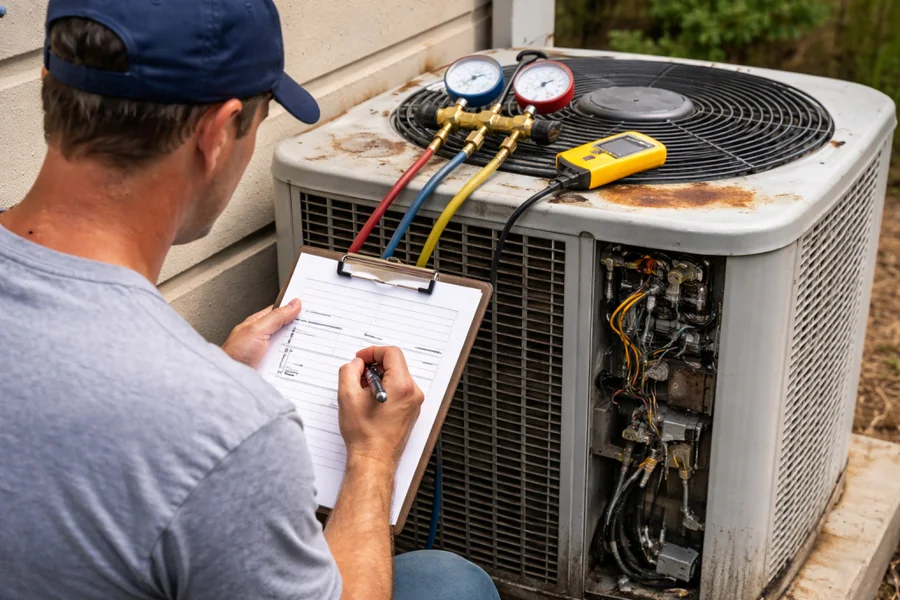
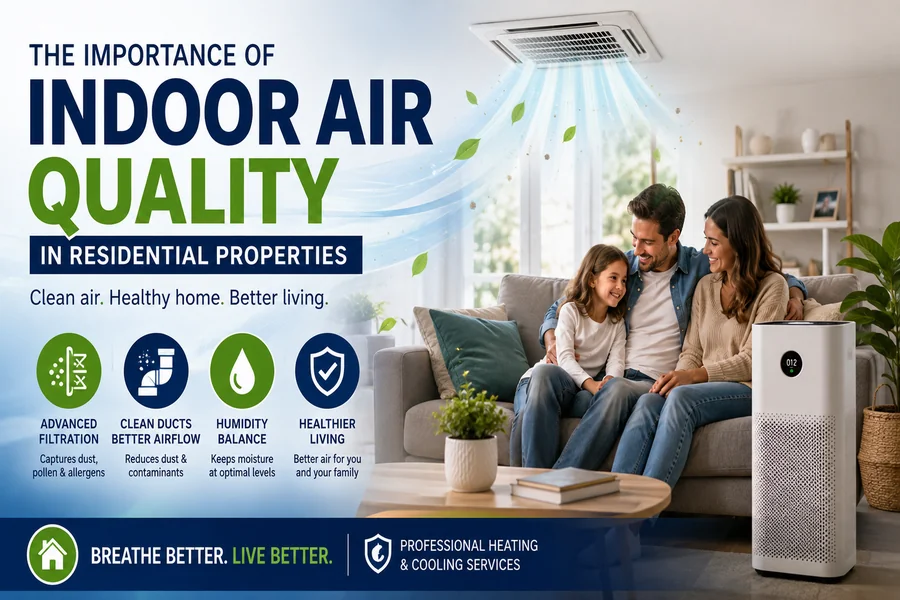
Most homeowners think about their HVAC system primarily in terms of temperature. During summer, the goal is to keep the house cool, while winter means maintaining a warm and comfortable living space. However, temperature is only one part of creating a comfortable indoor environment. Indoor air quality (IAQ) can be just as important.
The air inside a home can contain dust, pollen, pet dander, mold spores, smoke particles, and other airborne contaminants. Certain household products, paints, furniture, and building materials can also release volatile organic compounds (VOCs). Without adequate ventilation and filtration, some of these pollutants may continue circulating through the home’s air.
Understanding the importance of indoor air quality in residential properties can help homeowners make smarter decisions about HVAC maintenance, filtration, ventilation, and humidity control.
What Is Indoor Air Quality?
Indoor air quality describes the condition of the air inside a building and how factors such as pollutants, ventilation, temperature, and humidity affect that environment.
Poor indoor air quality isn’t always obvious. You might notice excessive dust or unpleasant odors, but many airborne particles are too small to see.
Common indoor air contaminants can include:
- Dust and dust mites
- Pollen
- Pet hair and dander
- Mold spores
- Smoke particles
- Cleaning-product emissions
- VOCs from household materials
- Outdoor pollutants entering the home
Because modern homes are often designed to limit uncontrolled outdoor air infiltration for greater energy efficiency, proper ventilation and HVAC maintenance become particularly important.
Why Indoor Air Quality Matters for Homeowners
Good indoor air quality contributes to a cleaner and more comfortable home. While HVAC equipment can’t eliminate every possible contaminant, the right combination of filtration, ventilation, humidity management, and routine maintenance can help reduce unwanted particles and improve overall indoor conditions.
People spend a significant amount of time inside their homes, which makes indoor environmental quality worth considering alongside heating and cooling performance.
If you’re frequently seeing dust shortly after cleaning, noticing persistent odors, or experiencing rooms that feel unusually humid or dry, it may be time to evaluate more than just the thermostat.
How HVAC Systems Affect Indoor Air Quality
Your HVAC system moves large amounts of air throughout the house. That means it can play an important role in managing indoor air quality.
Air travels through return vents, passes through the HVAC equipment and filtration system, and is distributed back into rooms. When filters are neglected or ductwork has problems, the system may not perform as effectively as intended.
Homeowners evaluating their heating and cooling services can therefore benefit from considering indoor air quality at the same time. An HVAC professional can evaluate the existing equipment, filters, ductwork, airflow, and other components to determine whether improvements are appropriate for the property.
1. Improve Indoor Air Quality With Better Filtration
The HVAC filter is one of the simplest components to check when trying to maintain cleaner indoor air.
Filters capture particles as air moves through the system. However, filters eventually become loaded with debris and require replacement or cleaning, depending on the type.
A severely dirty filter can restrict airflow, potentially making the HVAC system work harder while reducing its ability to capture additional particles.
Homeowners should follow the filter manufacturer’s replacement recommendations while also considering factors such as:
- Number of occupants
- Pets in the home
- Local dust conditions
- Construction or remodeling
- Type of HVAC equipment
- Filter specifications
Higher-efficiency filtration may be beneficial in some homes, but don’t simply install the highest-rated filter you can find. Some HVAC systems require specific airflow characteristics, so a professional should confirm that a filter is compatible with the equipment.
2. Consider Whole-House Air Purification
For homeowners looking beyond standard filtration, a whole-house air purifier may provide another layer of air treatment.
Unlike portable units designed for individual rooms, whole-home systems can be integrated with HVAC equipment to treat circulating air throughout the property.
Depending on the technology, these systems may be designed to capture or reduce certain airborne particles and contaminants. Different products work in different ways, so homeowners should compare their specific needs rather than assuming every air-cleaning system provides the same benefits.
An HVAC professional can help determine whether additional air purification is appropriate and which technology is compatible with the existing system.
3. Inspect Ductwork and Address Air Leaks
Ductwork is responsible for delivering conditioned air throughout a home, yet it’s easy to overlook because much of it is hidden behind walls, ceilings, or floors.
Damaged or poorly sealed ducts can contribute to comfort and efficiency problems. Depending on where leaks occur, they may also allow dust or contaminants from attics, crawl spaces, garages, or other unconditioned areas to enter the air-distribution system.
Possible signs of ductwork problems include:
- Excessive dust near vents
- Weak airflow in certain rooms
- Rooms that are difficult to heat or cool
- Whistling sounds around ducts or registers
- Visible disconnected or damaged ducts
- Unusually high heating or cooling costs
Professional duct inspection and sealing can help address leakage when it is identified. Duct cleaning may also be appropriate in certain circumstances, but it should be recommended based on the actual condition of the system rather than treated as an automatic solution for every home.
4. Manage Indoor Humidity
Humidity has a major influence on how comfortable indoor air feels.
Air that is excessively dry can feel uncomfortable, while too much moisture can create conditions that encourage mold and other moisture-related problems.
A commonly recommended general target is roughly 30% to 50% relative humidity, although the appropriate level can vary with climate, season, building conditions, and individual circumstances.
Depending on the property, humidity can be managed using:
- Whole-house humidifiers
- Dehumidifiers
- Proper ventilation
- Air-conditioning equipment
- Exhaust fans in bathrooms and kitchens
- Repairs to moisture or water-intrusion problems
Before installing additional equipment, determine why humidity is outside the desired range. A plumbing leak or building-envelope problem, for example, shouldn’t be addressed solely by adding a dehumidifier.
5. Don’t Overlook Fresh-Air Ventilation
Filtration deals with particles already circulating through the HVAC system, but ventilation addresses another important issue: bringing fresh outdoor air into a building and exhausting stale indoor air when appropriate.
Activities such as cooking, showering, cleaning, and using certain household products can introduce moisture, odors, and pollutants.
Simple practices can help, including using kitchen exhaust and bathroom ventilation correctly. Some properties may also benefit from mechanical ventilation systems designed to exchange indoor and outdoor air in a controlled manner.
The right strategy depends heavily on the home’s construction, climate, and existing HVAC setup.
Signs Your Home May Need an Indoor Air Quality Evaluation
Indoor air quality problems can have many causes, so a single symptom doesn’t necessarily point to the HVAC system. Still, certain recurring issues are worth investigating.
Consider having your home evaluated if you notice:
- Persistent musty or unusual odors
- Excessive indoor dust
- Visible mold or recurring moisture
- Large humidity fluctuations
- Condensation in unexpected areas
- Poor airflow from vents
- Frequently clogged HVAC filters
- Dust or debris blowing from registers
Water intrusion and visible mold should be addressed at their source rather than relying exclusively on air-cleaning equipment.
Make Indoor Air Quality Part of Routine HVAC Maintenance
Improving indoor air quality doesn’t always require expensive equipment. Some of the most valuable steps are also the simplest.
Check HVAC filters regularly, keep supply and return vents unobstructed, use exhaust ventilation appropriately, monitor indoor humidity, and pay attention to changes in airflow or odors.
Professional HVAC maintenance provides another opportunity to evaluate how the system is operating and identify issues that may affect comfort, airflow, filtration, or efficiency.
Creating a Cleaner, More Comfortable Home
Heating and cooling are essential parts of residential comfort, but the quality of the air moving through a home deserves attention as well.
Effective indoor air quality solutions may involve several strategies working together, including appropriate HVAC filtration, properly maintained ductwork, controlled humidity, ventilation, and regular equipment maintenance.
Instead of waiting until dust, airflow problems, odors, or humidity become difficult to ignore, homeowners can make indoor air quality part of their regular property-maintenance routine. Evaluating your home’s heating and cooling services alongside filtration and air-quality needs can help create a more comfortable indoor environment throughout the year.
A well-maintained HVAC system isn’t simply about achieving the right number on the thermostat. It’s about creating an indoor environment where clean airflow, appropriate humidity, efficient operation, and dependable temperature control work together.