Every sleep expert says the same thing about televisions in the bedroom, and almost nobody actually follows it. Take the TV out, they say, since screens interfere with winding down and the blue light disrupts the body’s natural signal that it’s time to rest. Meanwhile plenty of people fall asleep to something playing every single night anyway, quietly ignoring the advice because the habit feels harmless and genuinely comforting rather than disruptive in any way they can actually notice. Rather than pretending the TV will simply disappear one day, better room decor tends to work with that reality instead of fighting it outright forever.
Why the TV Stays Even Though Every Sleep Expert Says Remove It
The advice isn’t wrong, exactly, but it also ignores how a lot of people actually use a bedroom television in practice. For plenty of people, it’s not mindless late-night scrolling through channels. It’s often a familiar show playing quietly in the background while they drift off, something predictable enough that the brain barely has to track the plot at all anymore. Removing the TV outright sounds simple on paper, but it often just relocates the exact same habit to a phone screen instead, which tends to be an even worse trade for actual sleep quality in the end.
The Middle Ground Nobody Talks About
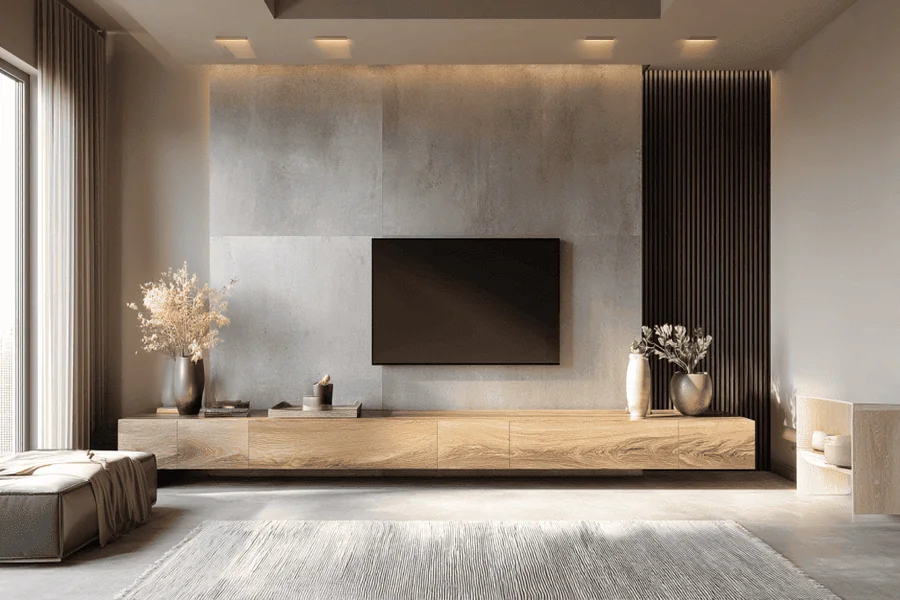
Instead of an all-or-nothing rule, a lot of bedrooms benefit more from managing how visible the TV actually is during the day rather than banning it outright at night. A wall-mounted screen positioned above a dresser reads very differently from a giant black rectangle dominating the entire wall the moment someone walks into the room. Some people frame it with simple wooden shelving on either side so it blends into a larger arrangement instead of standing out as the obvious focal point. Others cover it entirely with a piece of art on a motorized mount, though that solution costs considerably more than most people are actually willing to spend on it.
Making the Room Work Either Way
The goal isn’t eliminating the screen or defending it either. It’s making sure the rest of the room doesn’t visually revolve around it regardless of whether it stays or eventually goes. A nightstand with its own warm lamp, a shelf holding something other than remote controls, one piece of wall art positioned somewhere that isn’t directly behind the television – these all keep the room from feeling like it was built entirely around a screen, whichever choice someone actually ends up making about the TV itself.