
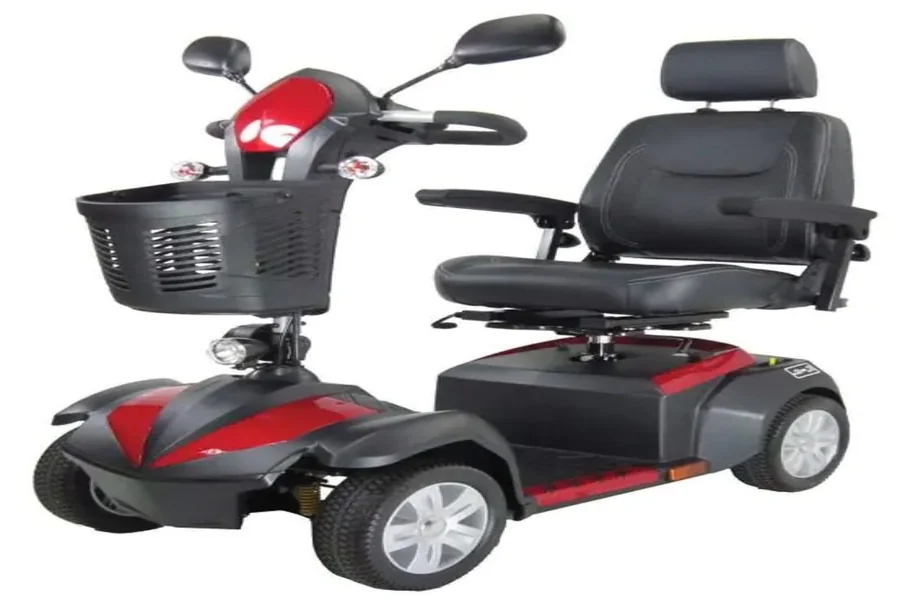
Choosing a mobility scooter involves more than speed, range, and looks. For many riders, how secure they feel while riding matters as much as getting to their destination. A scooter that offers comfort and stability on long rides can make your everyday rides easier and less stressful.
Different scooter designs offer different riding experiences. Four-wheel models generally have a wider base and more support, while three-wheel models can turn with a tighter radius. These differences affect a scooter’s ability to negotiate turns, bumpy terrain, and changes in direction.
Understanding how a four-wheel scooter’s design contributes to stability and comfort can help you decide whether the configuration fits your needs. This guide looks at what makes a ride enjoyable, including wheel arrangement, suspension, seat, controls, and overall design.
1. Create a Wider and More Stable Base
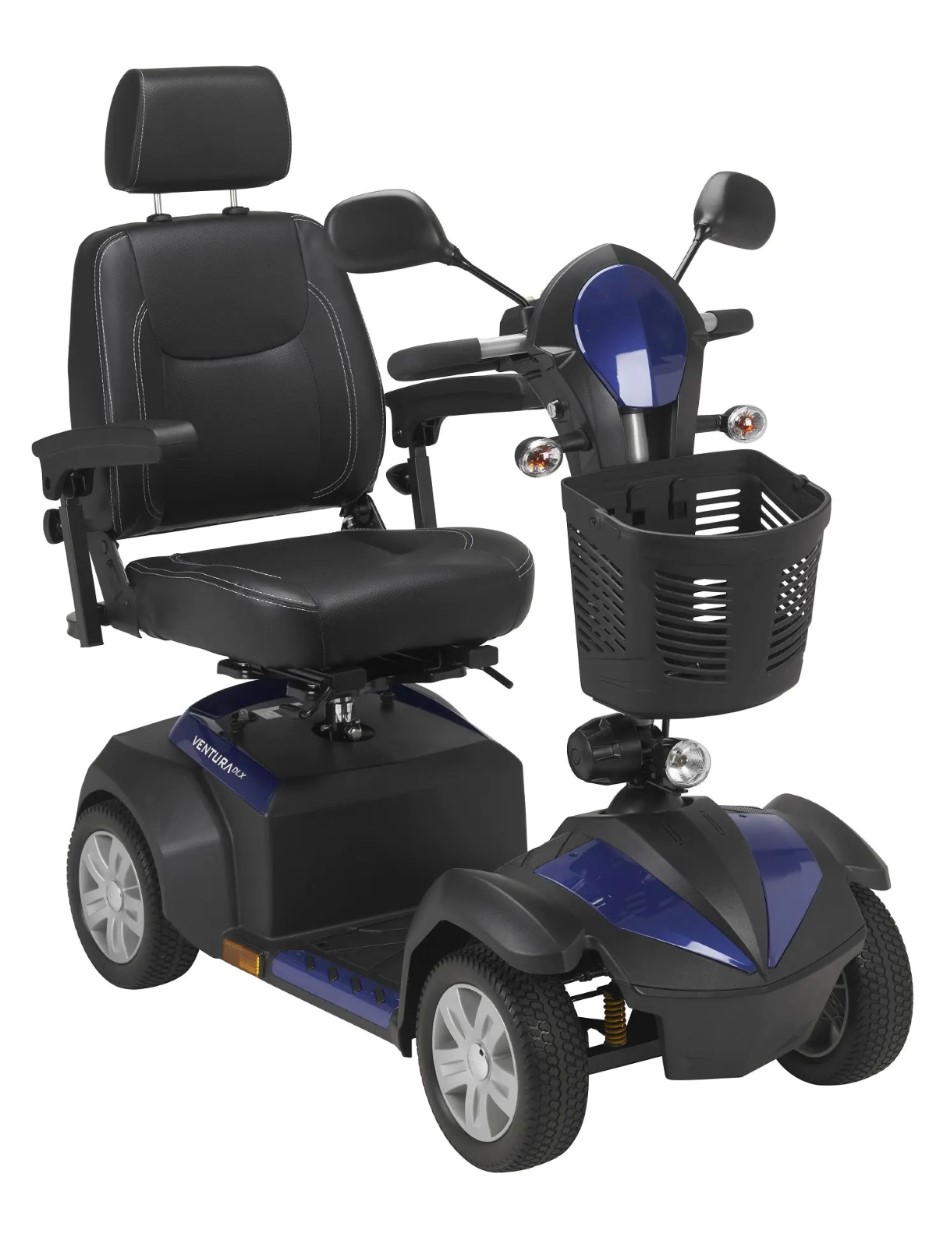
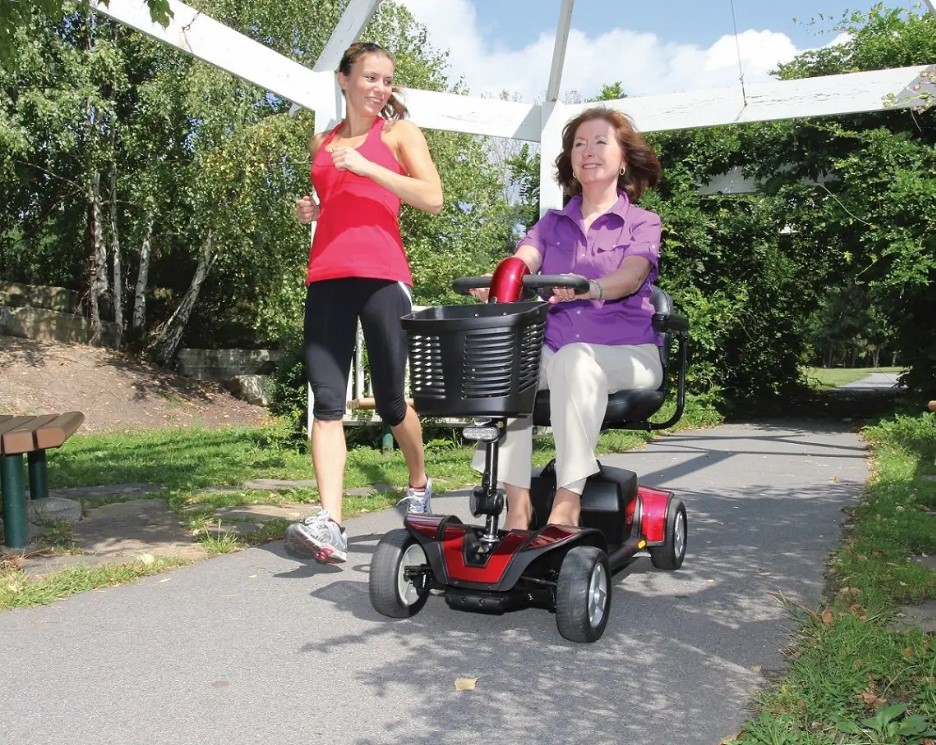
A 4-wheel scooter has a wider base, meaning four points touch the ground and the rider feels more stable during daily commutes. The extra wheels can also provide more support over different surfaces and during turns.
The scooter has a balanced footprint, two wheels at the front and two at the rear. This setup can reduce the feeling of tipping during certain movements and provide a more stable ride. This is especially helpful for riders who want stability while riding outdoors.
Such a design does not mean a four-wheel scooter can not tip at all. Riders still need to follow the manufacturer’s specifications for speed, weight capacity, slopes, and terrain. However, the four-wheel configuration gives a stable base for normal riding conditions.
2. Wheel Arrangement Supports Confident Handling
The four-wheel layout may provide more predictable handling for straight-line motion and gentle turns. The front and rear wheels work perfectly together to transfer the scooter’s weight to the ground.
Riding on pavements, pathways, shopping areas, or other surfaces that require stability may prove advantageous. The scooter’s front and rear supports also give riders a sense of security when smoothly adjusting direction.
Proper treatment of each model depends upon its specific characteristics. Factors such as wheelbase, tire size, steering design, weight distribution, and overall dimensions can all affect how a scooter reacts to steering inputs.
Therefore, riders should judge the whole design and not assume each four-wheeled scooter will perform the same way.
3. Suspension Will Improve Comfort On Uneven Surfaces
A suspension system helps absorb vibrations and bumps caused by uneven terrain. This quality makes a noticeable difference when riding a scooter on uneven surfaces.
Some scooter models have front suspension, rear suspension, or systems built to work on both ends. The effectiveness of the suspension depends on the terrain and the scooter design.
If the suspension isn’t adequate, bumps can transfer more directly through the frame and into the seat. Repetitive vibration can make riding uncomfortable for riders who spend extended periods on their scooters.
When comparing models, check that the manufacturer rates the scooter for the terrain you expect to encounter and that it includes suspension.
4. Larger Tires Will Help With Different Surfaces
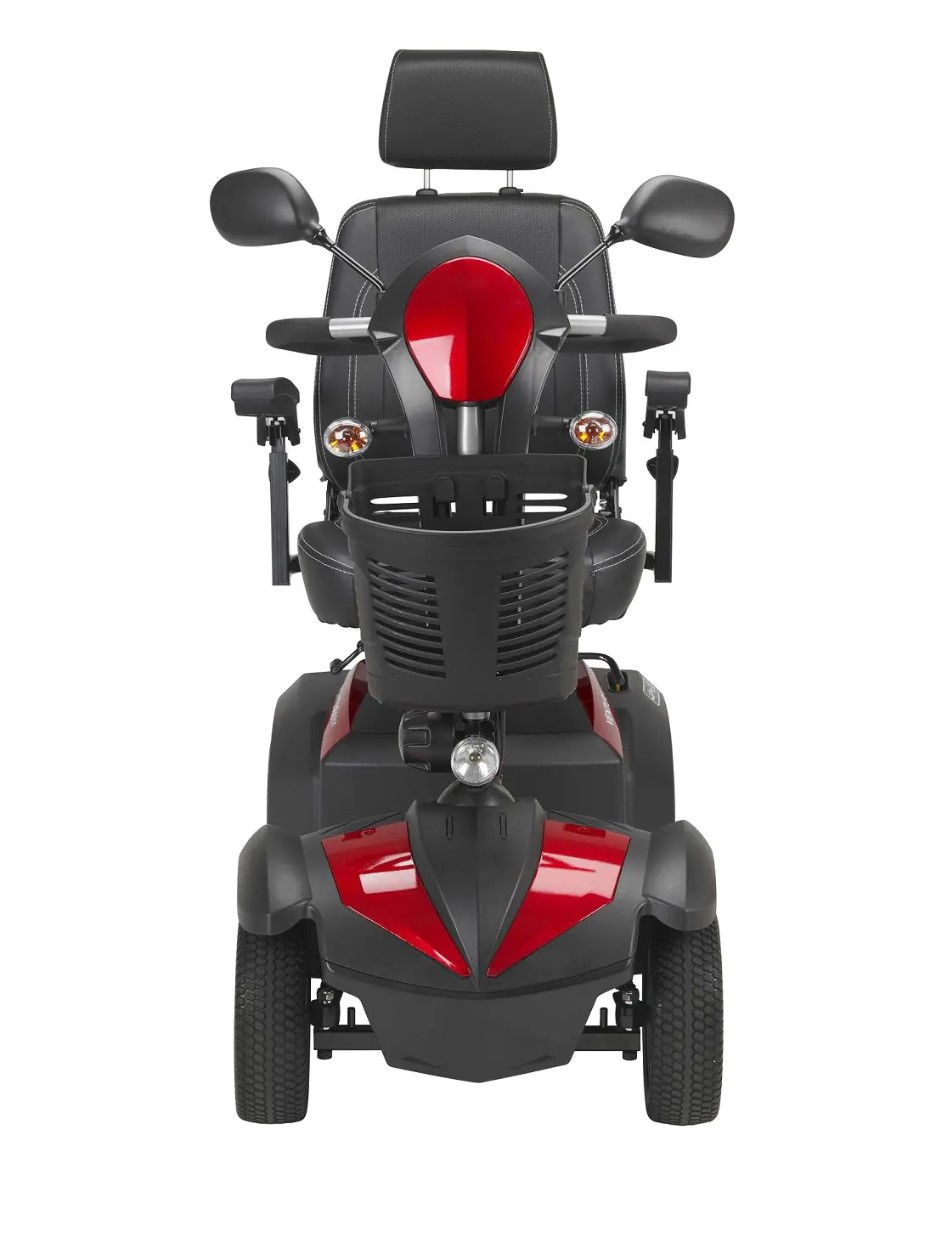
The handling of a four-wheel scooter on different surfaces can be affected by tire size and construction. Bigger tires also increase ground contact, making the scooter more comfortable over small surface irregularities.
Pneumatic tires are filled with air and may offer additional cushioning, while solid or puncture-free tires eliminate the need to deal with punctures. Depending on the scooter’s location and how you use it, each option has advantages.
Scooters meant primarily for indoor use may have different tires than scooters meant for outdoor use. That is why riders should consider the surfaces they plan to ride on regularly.
Even with larger tires, a scooter is still limited. You should consider a model that is specifically engineered for deep gravel, steep slopes, wet surfaces, and other challenging terrain.
5. Weight Distribution Can Influence Stability
Where the scooter’s weight is distributed can affect balance, handling, and the overall riding experience. A well-designed scooter places its major components so the vehicle stays balanced during normal operation.
A scooter’s weight includes all its parts: the battery, motor, frame, seat, and everything else. The rider’s weight also affects weight distribution.
That’s why manufacturers always specify maximum user weight limits. Exceeding the recommended capacity can stress the scooter’s components, affect handling, and cause additional damage.
When selecting a model, consider the manufacturer’s weight capacity along with the expected storage capacity. A scooter that fits the rider and their everyday stuff comfortably can lead to a better riding experience.
6. Ergonomic Controls Make Riding More Comfortable
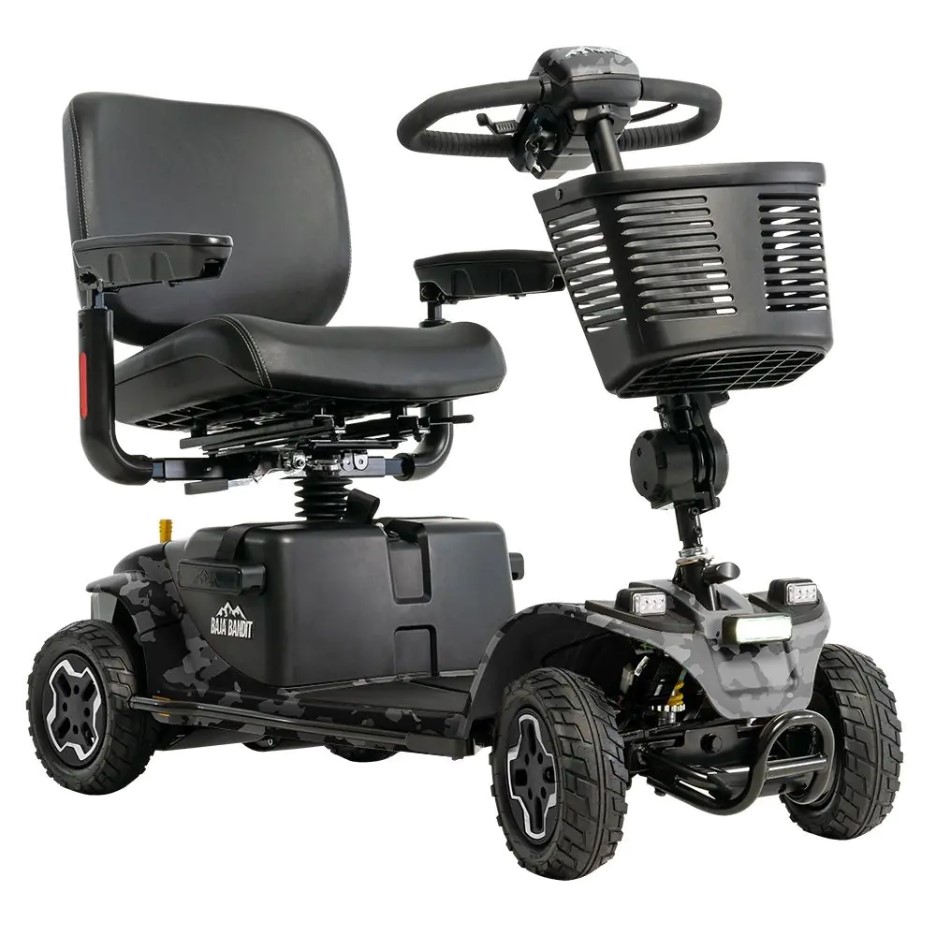
Easy-to-use controls can prevent unnecessary strain and improve comfort. The rider should be able to reach the tiller and operate the controls without twisting, stretching, or repeatedly readjusting their seating position.
Mobility scooters frequently use simple controls for acceleration and steering. Some models offer an adjustable tiller angle to help position the controls. The controls should also be simple to understand.
Clearly located, accessible switches help riders who have difficulty manipulating or seeing small controls. Before buying, check that the steering mechanism is comfortable and that the controls operate without excessive force.
7. Stable Design Can Help During Everyday Outdoor Trips
Those who often ride outdoors and value stability will find four-wheel scooters beneficial. A scooter encounters small changes in floor surface at shopping centers, sidewalks, parks, residential walkways, and other locations.
A scooter can stay in contact with the ground and clear these common obstacles by maintaining a stable configuration. But riders should still slow down at corners, ramps, uneven surfaces, and other potentially dangerous areas.
Another factor to consider is ground clearance. Make sure the underside of a scooter has enough clearance to avoid contact with small obstacles or changes in surface height. Before you ride a scooter outside its intended environment, check the terrain capabilities listed by the manufacturer.
8. Safety Features Complete The Design
Stability and comfort should complement the right safety features, not replace them. Depending on the model, these may include brakes, anti-tip wheels, speed controls, reflectors, and front and rear lights.
Lighting can improve visibility in low-light conditions, and mirrors and reflectors can help riders stay aware of their surroundings. Under some conditions, anti-tip wheels can provide extra protection, but they shouldn’t encourage riders to exceed the scooter’s operating limits.
Riders should also follow the manufacturer’s guidance on terrain, speed, weight capacity, maintenance, and charging. Frequent inspections of the scooter’s tires, brakes, battery, and other components will keep it functioning as it should.
Conclusion
Some four-wheel scooters also offer a four-point wheel arrangement, balanced design, supportive seating, suitable tires, suspension, and accessible controls, creating a combination of stability and comfort. But each scooter’s specifications may differ, and riders will need to decide whether a given model fits their body size, daily schedule, environment, and mobility needs.
Consider the whole design, rather than a single feature. A scooter with comfortable controls, appropriate suspension, appropriate dimensions, and suitable support will make daily mobility more enjoyable while still delivering the stable riding experience many users want.