
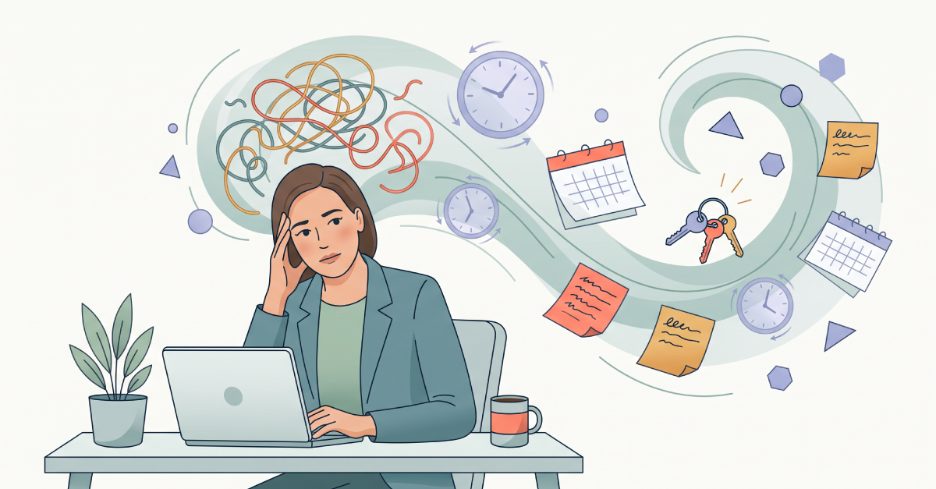
You may struggle to finish a routine task, yet spend hours fully absorbed in something that interests you. At other times, losing track of time during a favorite activity can mean forgetting an appointment, deadline, or household responsibility. For adults with ADHD, patterns like these can be part of how the condition affects attention in everyday life.
Those shifts can leave you wondering why some activities hold your attention so strongly while others are hard to start or finish. One possible piece of the puzzle involves dopamine, a brain chemical involved in reward, motivation, and attention. Research has found differences in dopamine transporter availability in brain regions linked with reward and attention among adults with ADHD.
Could differences in dopamine, reward, and motivation help explain why some activities hold your attention for hours while routine tasks feel harder to start? The sections below explore that connection, along with hyperfocus, adult ADHD symptoms, late diagnosis, daily effects, assessment, and support.
How Dopamine, Attention, And Hyperfocus Work In ADHD
Attention in ADHD involves more than simply being able or unable to concentrate. ADHD symptoms in adults can manifest as differences in interest in a task, attention, motivation, reward, executive function, and impulse control, and interest in a task can also influence attention focus and how attention is sustained.
Dopamine Regulation and ADHD
Dopamine is a brain chemical that takes part in a variety of brain activities, such as reward, motivation, attention, and behavior. In adults with ADHD, studies have revealed that there are differences in the availability of dopamine transporters in reward and attention areas of the brain.
Such results do not imply that having an insufficient amount of dopamine is the sole cause of ADHD. ADHD is a disorder of multiple brain systems and processes, and hence, dopamine is a piece of the big picture.
It is still possible that reward and motivation can explain some patterns of attention. A task that is interesting or rewarding can be easier to draw attention to, whereas a routine task may need more effort to initiate or sustain.
Hyperfocus and ADHD
Hyperfocus refers to a state of intense, narrow, and prolonged attention. An engaging hobby, project, game, creative activity, or favorite subject may hold your attention for a long period while other responsibilities receive less attention.
A 2024 study of university students found that greater ADHD symptoms and executive function difficulties were associated with more frequent hyperfocus.
Hyperfocus may seem to conflict with the idea that ADHD always involves poor concentration. Instead, attention can vary with interest, reward, task demands, and other factors, which helps explain why intense focus on one activity can exist alongside difficulty starting another.
Executive Function and Impulse Control
Attention is only one part of ADHD. Executive functions support planning, organization, decision-making, time management, impulse control, and task completion.
You may know what needs to be done but still have trouble getting started. Once an interesting project begins, a long period of focused attention may also make it harder to switch to another responsibility.
Impulse control can affect everyday interactions as well. Interrupting conversations, making quick decisions, acting before considering the result, or seeking activities that provide more stimulation can occur alongside attention difficulties.
Adult ADHD Symptoms in Daily Life
The science behind attention, motivation, and impulse control can show up in many parts of adult life. You may miss appointments, lose important items, struggle with deadlines, or find it hard to keep track of several responsibilities at once.
Work, education, relationships, and household tasks can all require sustained attention and organization. Recognizing these patterns across different parts of daily life can provide useful context when discussing persistent concerns with a qualified health professional.
Late ADHD Diagnosis in Adults
ADHD usually begins during childhood, even when an adult receives a diagnosis much later. A structured home, strong academic ability, supportive parents, or personal coping strategies may help manage symptoms for years.
Adult life can bring a larger set of demands. University, career responsibilities, relationships, parenting, finances, and household tasks can require more planning and organization than earlier stages of life.
As those demands increase, coping methods that once worked well may no longer cover every responsibility. Long-standing patterns may then become easier to recognize, especially when forgetfulness, procrastination, or organization difficulties begin affecting several areas of life.
Women may also receive a diagnosis later. Daydreaming, forgetfulness, quiet attention difficulties, and extensive efforts to compensate can be less noticeable than obvious hyperactivity or disruptive behavior.
Similar Conditions and Attention Problems
Difficulty concentrating does not automatically mean you have ADHD. Anxiety, depression, sleep disorders, substance use, and some medical conditions can also affect attention and daily functioning.
ADHD can occur alongside other conditions, which can make assessment more complex. A proper evaluation considers developmental history, symptoms across different settings, daily impairment, physical health, and possible coexisting conditions.
An online questionnaire may help identify areas worth discussing with a professional, but it cannot establish an ADHD diagnosis by itself. A broader clinical assessment provides a better basis for understanding persistent attention, organization, and impulse-control difficulties.
Adult ADHD Assessment and Support
A late diagnosis can provide a clearer explanation for difficulties that have affected your life for years. It can also offer a starting point for strategies that support attention, organization, motivation, and impulse control.
Support can include education about ADHD, organizational strategies, environmental changes, psychological interventions, and medication when appropriate. The right approach depends on your symptoms, daily needs, health history, and other factors.
Practical changes can also support daily routines. Reminders can help with appointments; designated places can keep important items easier to find, and smaller task steps can make large responsibilities easier to start.
Bottom Line
Dopamine regulation offers one part of the science behind adult ADHD, while hyperfocus shows why attention can look different from one task to another. ADHD involves more than difficulty concentrating, with attention, motivation, organization, executive function, and impulse control all contributing to daily patterns.
Adult responsibilities can also make long-standing symptoms easier to recognize. If persistent attention or organization difficulties affect work, relationships, finances, or routines, a proper assessment can help clarify the pattern and identify suitable support.