
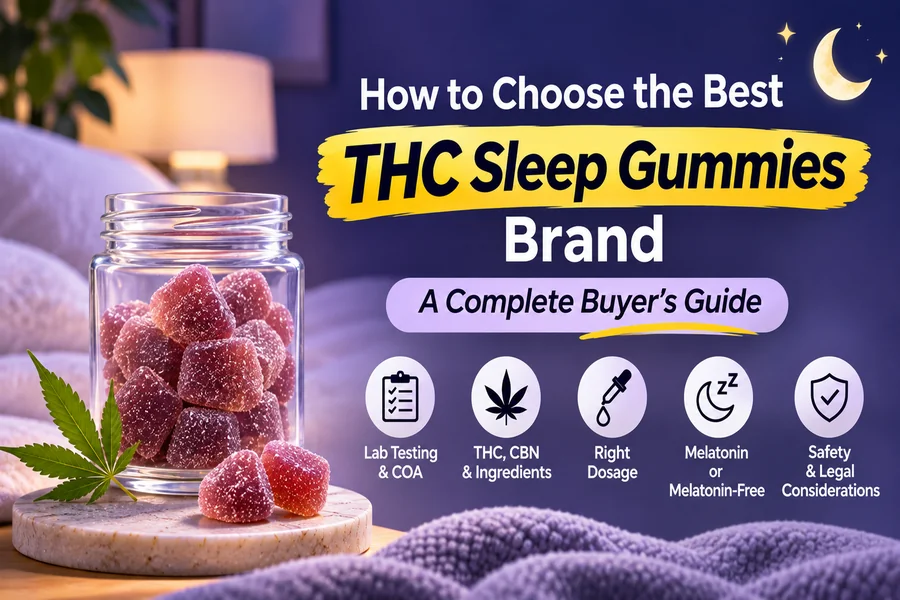
Choosing the best THC Sleep gummies brand involves more than finding a product with a high THC concentration. Today’s cannabis gummies come in different formulations, combining Delta-9 THC with cannabinoids such as CBN and CBD, as well as ingredients like chamomile, valerian root, L-tryptophan, and melatonin. With so many combinations available, it can be difficult to understand which products are worth comparing.
The bigger concern is product transparency. Does the gummy contain the amount of THC stated on its label? Does the manufacturer publish independent laboratory results? Are the additional ingredients clearly identified? And does the brand provide enough information for consumers to make an informed decision?
These questions matter because not every cannabis gummy is manufactured or tested to the same standards. A 2023 study examining 53 hemp-derived Delta-9 THC products found that 66% differed from their advertised THC dosage by more than 10%. This highlights why checking a product’s Certificate of Analysis (COA) should be a priority rather than an afterthought.
In this guide, we’ll explain how to evaluate THC sleep gummy brands by comparing cannabinoid content, ingredient quality, laboratory testing, manufacturing transparency, pricing, and availability. We’ll also discuss what current research says about THC and CBN, the potential risks of edible cannabis, and important legal considerations.
Whether you’re comparing melatonin-free formulas or researching THC and CBN combinations, understanding these factors can help you distinguish transparent brands from products that rely primarily on marketing claims.
How Do You Choose the Best THC Sleep Gummies Brand?
Start with the product’s laboratory report, then compare its cannabinoid formulation, ingredients, labeling, and manufacturer transparency.
Here are seven factors to evaluate:
- Third-party laboratory testing: Look for a batch-specific COA from an independent laboratory.
- THC concentration: Check the exact Delta-9 THC content per gummy and per package.
- CBN and other cannabinoids: Compare the amounts of CBN, CBD, and other active ingredients.
- Melatonin content: Check whether the formula contains melatonin and how much.
- Ingredient quality: Review sweeteners, flavors, allergens, and the gummy base.
- Brand transparency: Look for clear manufacturing information, customer support, and accessible test reports.
- Legal availability: Confirm that the product can legally be purchased and sold in your location.
The most important rule: Don’t judge a THC gummy brand by its advertised potency alone. A transparent label and verifiable laboratory results are more useful than exaggerated claims about sleep performance.
1. Check Third-Party Laboratory Testing First
Third-party laboratory testing is one of the most important factors when choosing a THC sleep gummy brand.
A Certificate of Analysis (COA) is a laboratory report that provides information about a cannabis product’s cannabinoid content and, depending on the testing panel, potential contaminants.
It helps consumers verify whether the product’s actual composition is consistent with what the manufacturer advertises.
Why does third-party testing matter?
THC content can vary between products and production batches. A gummy advertised as containing a particular amount of Delta-9 THC may not contain exactly that amount.
A 2023 study published in the Journal of Cannabis Research analyzed 53 hemp-derived Delta-9 THC products. Researchers found that 66% differed from their advertised THC dosage by more than 10%. The study also identified gaps in impurity testing among the products examined.
This makes independent testing particularly important when comparing hemp-derived THC gummies.
What should a THC gummy COA include?
| Testing category | What to look for |
| Cannabinoid potency | Delta-9 THC, CBD, CBN, and other declared cannabinoids |
| Heavy metals | Testing for lead, arsenic, mercury, and other relevant metals |
| Pesticides | Screening for potentially harmful agricultural chemicals |
| Residual solvents | Testing for solvents that may remain after extraction |
| Microbial contaminants | Relevant bacteria, yeast, and mold testing |
How to verify a COA
Before considering a product, follow these checks:
- Match the batch number: The COA should correspond to the production batch printed on the packaging.
- Check the testing date: Make sure the report relates to the product batch being sold.
- Identify the laboratory: Look for an independent testing facility and relevant accreditation, such as ISO/IEC 17025.
- Review cannabinoid results: Confirm that the reported THC and other cannabinoid concentrations are understandable and consistent with the product label.
- Check contaminant results: Look beyond potency testing and review the available safety panels.
A generic statement such as “third-party lab tested” is not enough on its own. A brand should make the relevant laboratory documentation accessible.
2. Compare THC Concentration Per Gummy
THC potency is another important consideration when comparing cannabis sleep gummies.
Most manufacturers display THC concentration in milligrams (mg). However, there is an important difference between the THC content of an individual gummy and the total THC content of the package.
For example, a hypothetical package containing 10 gummies with 5 mg of THC per gummy contains 50 mg of THC in total.
Always check both figures before comparing products.
What should you check on the label?
- Delta-9 THC per gummy.
- Total THC per package.
- Serving-size information.
- Whether the gummy can be divided accurately.
- Whether the stated potency matches the laboratory report.
A higher THC concentration does not automatically make a gummy better or more effective for sleep. THC is intoxicating and can cause unwanted effects, including anxiety, dizziness, impaired coordination, and next-day drowsiness.
There is no universally appropriate THC amount for everyone. People considering THC products should follow applicable product regulations and seek advice from a qualified healthcare professional, particularly if they are unfamiliar with cannabis edibles or take medication.
3. Understand the Role of CBN in THC Sleep Gummies
CBN, or cannabinol, is a cannabinoid found in cannabis. It has become a common ingredient in products marketed for nighttime use.
Many manufacturers combine CBN with Delta-9 THC to create multi-cannabinoid formulas.
But why do brands include CBN, and what does the research actually say?
What does research say about CBN?
A randomized, double-blind, placebo-controlled study published in 2023 investigated CBN in adults who reported poor sleep.
The study included 293 participants in its modified intention-to-treat analysis and evaluated 20 mg of CBN, both alone and in combination with different amounts of CBD.
Researchers reported that 20 mg of CBN significantly reduced the number of nighttime awakenings and overall sleep disturbance compared with placebo. However, it did not significantly improve self-reported sleep quality, sleep-onset latency, or wake time after sleep onset.
Importantly, this was a short study of CBN, not a clinical trial of commercial THC-and-CBN gummies. Its findings do not establish that combining THC and CBN produces the same results.
What should you compare?
When evaluating a product containing CBN, check:
- The exact CBN amount per gummy.
- Whether the manufacturer publishes a batch-specific COA.
- Whether the product also contains CBD or other cannabinoids.
- Whether the product clearly identifies each active ingredient.
Avoid relying on vague descriptions such as “CBN enhanced” or “advanced sleep blend” without a clear breakdown of cannabinoid content.
4. Check Whether the Formula Contains Melatonin
Melatonin is a hormone involved in regulating the body’s sleep-wake cycle. It is also commonly included in products marketed for nighttime use.
Some THC sleep gummies contain melatonin, while others use cannabinoid combinations and botanical ingredients instead.
Neither formulation is automatically better. The right comparison depends on the ingredients, product transparency, individual circumstances, and potential risks.
Why do some shoppers prefer melatonin-free gummies?
Some consumers prefer to avoid adding melatonin to a cannabinoid product, particularly if they have previously experienced unwanted effects or already use a separate melatonin supplement.
If you’re comparing products, check:
- Whether melatonin is included.
- The amount per gummy.
- Whether the ingredient is clearly identified on the label.
- Whether the manufacturer provides information about potential interactions and warnings.
Don’t assume that a product is melatonin-free simply because the front of its packaging does not mention it. Read the complete ingredient list.
5. Examine the Additional Ingredients
THC and CBN are not the only ingredients worth evaluating.
Many nighttime gummies contain additional cannabinoids, botanical extracts, amino acids, flavors, and sweeteners.
Here are some ingredients you may encounter:
| Ingredient | Why brands include it | What to consider |
| CBD | A non-intoxicating cannabinoid used in multi-cannabinoid formulations | Evidence for sleep benefits remains limited |
| CBN | Commonly included in nighttime cannabis products | Human research is still limited |
| Chamomile | Traditional botanical ingredient | Check the extract and amount used |
| Valerian root | Botanical ingredient used in some sleep-focused supplements | Evidence and product formulations vary |
| Lavender | Used in wellness and nighttime formulations | Check whether the product specifies the amount |
| L-tryptophan | An amino acid involved in serotonin and melatonin production | Consider potential interactions and seek medical advice |
| Vitamin B6 | A vitamin involved in normal metabolic functions | Check the amount and avoid assuming it improves sleep |
The presence of several ingredients does not automatically make a product more effective.
Look for complete ingredient lists and clearly disclosed quantities. Be cautious of proprietary blends that hide how much of each active ingredient is included.
6. Evaluate the Gummy Base, Sweeteners, and Allergens
The ingredients that form the gummy itself also deserve attention.
THC gummies commonly use either pectin or gelatin as their base.
Pectin-based gummies: Pectin is plant-derived and is commonly used in vegan gummy formulations.
Gelatin-based gummies: Gelatin is animal-derived and may not be suitable for people following a vegan diet.
You should also check:
- Added sugar and sweeteners.
- Artificial colors and flavors.
- Common allergens.
- Coconut or other nut-derived ingredients.
- Preservatives and other additives.
A brand that publishes a complete ingredient list makes it easier to evaluate whether its product fits your dietary preferences and ingredient restrictions.
7. Look at Brand Reputation and Manufacturing Transparency
A product’s label is important, but the company behind it matters too.
A reliable THC gummy manufacturer should make it easy to find information about its products, testing practices, ingredients, and business operations.
Consider these factors:
Manufacturing information
Look for details about where the product is manufactured and what quality-control procedures the company follows.
Certifications and manufacturing claims should be independently verifiable wherever possible.
Transparent sourcing
Brands should provide useful information about the origin of their hemp or cannabis ingredients, where applicable.
Accessible laboratory reports
Check whether the company publishes batch-specific COAs and keeps its reports organized and accessible.
Clear customer support
A reputable company should provide clear contact information and be able to answer reasonable questions about ingredients, testing, and product labeling.
Customer reviews
Reviews can help identify recurring concerns about packaging, consistency, customer service, and product availability.
However, customer testimonials are not clinical evidence. A positive review cannot establish that a gummy treats insomnia or is safe for everyone.
8. Compare Price Per Gummy, Not Just Package Price
Price is another factor to consider when choosing between THC sleep gummy brands.
A package containing 30 gummies may appear more expensive than one containing 20, but the cost per gummy could be lower.
Use this simple calculation:
Price per gummy = Total package price ÷ Number of gummies
For example, if a hypothetical package costs $45 and contains 20 gummies, the cost per gummy is $2.25.
When comparing products, consider more than just the price:
- Number of gummies per package.
- THC concentration per gummy.
- CBN and other cannabinoid content.
- Availability of batch-specific laboratory testing.
- Shipping costs.
- Subscription and multi-pack pricing.
A cheaper gummy is not necessarily better value if the manufacturer does not provide sufficient information about its formulation or testing.
9. Understand Hemp-Derived vs. Dispensary THC Gummies
THC gummies can be sold through different regulatory and retail channels.
In the United States, two common categories are hemp-derived cannabinoid products and state-regulated cannabis dispensary products.
They are not interchangeable, and the applicable rules can differ.
| Factor | Hemp-derived products | Dispensary cannabis products |
| Source | Hemp-derived cannabinoids | Cannabis products sold through regulated cannabis systems |
| Availability | Depends on federal and state rules | Depends on state cannabis laws |
| Testing | Requirements vary by jurisdiction | Often subject to state-mandated testing |
| Purchasing | May be available online where permitted | Generally sold through licensed dispensaries |
| Pricing | Depends on the manufacturer and retailer | Varies by state and dispensary |
Do not assume that a product is legal simply because it is sold online or described as hemp-derived.
10. Understand the Safety Risks Before Choosing THC Gummies
THC gummies are intoxicating cannabis edibles. Their effects can vary considerably between individuals, and they are not suitable for everyone.
Potential unwanted effects include:
- Drowsiness and next-day grogginess.
- Dry mouth.
- Anxiety or panic.
- Impaired coordination and concentration.
- Changes in perception and judgment.
Why is delayed onset important?
Unlike inhaled cannabis, edible THC passes through the digestive system before its effects become noticeable.
According to the US Centers for Disease Control and Prevention (CDC), edible cannabis can take approximately 30 minutes to 2 hours to produce intoxicating effects. The effects may also last longer than expected.
This delay increases the risk of consuming more than intended because someone may mistakenly believe the initial amount has not worked.
Do not take additional THC simply because the effects are not immediately noticeable.
Who should be particularly cautious?
THC products should be avoided during pregnancy and breastfeeding. People with certain mental health conditions, a history of psychosis, or those taking prescription medications should seek medical advice before considering cannabis products.
Avoid combining THC with alcohol or sedating medications unless specifically advised by a healthcare professional.
Never drive or operate machinery after consuming THC. Keep all cannabis edibles in their original, child-resistant packaging and locked away from children and pets.
If sleep difficulties persist, consult a healthcare professional rather than relying on cannabis products as a substitute for an appropriate evaluation or treatment.
Frequently Asked Questions About Choosing THC Sleep Gummies
1. What should I look for when buying THC sleep gummies?
Start with a batch-specific Certificate of Analysis from an independent laboratory. Then compare THC concentration, CBN content, melatonin, additional ingredients, manufacturer transparency, pricing, and legal availability.
2. Are THC and CBN gummies better than THC-only gummies?
Not necessarily. Some manufacturers combine THC and CBN in nighttime formulas, but there is insufficient clinical evidence to establish that these combinations are more effective for sleep than THC alone. Compare the actual cannabinoid quantities rather than relying on marketing claims.
3. What is the difference between THC and CBN?
Delta-9 THC is an intoxicating cannabinoid that can alter perception, mood, and coordination. CBN is another cannabis-derived cannabinoid that is often included in nighttime products. Research into CBN’s potential effects on sleep is still limited.
4. Are melatonin-free THC sleep gummies available?
Yes. Some brands offer THC and CBN combinations without melatonin. Always check the complete ingredient list because formulations can vary between products.
5. Why is third-party testing important for THC gummies?
Third-party testing helps verify cannabinoid potency and identify potential contaminants. A batch-specific COA provides more useful information than a general statement that a product has been tested.
6. How long do THC gummies take to produce effects?
According to the CDC, edible cannabis can take approximately 30 minutes to 2 hours to produce intoxicating effects. The timing varies depending on the individual, product, food intake, and other factors. Effects may last longer than expected.
7. Can THC sleep gummies cause next-day grogginess?
Yes. THC can cause lingering drowsiness and impairment. The duration and intensity of these effects vary between individuals and products.
8. Are hemp-derived THC gummies legal everywhere in the United States?
No. Federal and state rules differ, and some states impose additional restrictions on hemp-derived cannabinoid products. The federal definition of hemp is also scheduled to change on December 11, 2026. Check current regulations before purchasing.
9. Can THC gummies cause a positive drug test?
Yes. Products containing THC can result in a positive drug test. Hemp-derived THC is not a guarantee of a negative result. Detection depends on several factors, including use patterns and the type of test.
10. Are THC gummies suitable for everyday use?
Regular THC use can lead to tolerance and dependence, and stopping after frequent use can cause withdrawal symptoms, including sleep disturbances. Long-term benefits and risks for sleep are not well established. Discuss persistent sleep problems with a healthcare professional.