
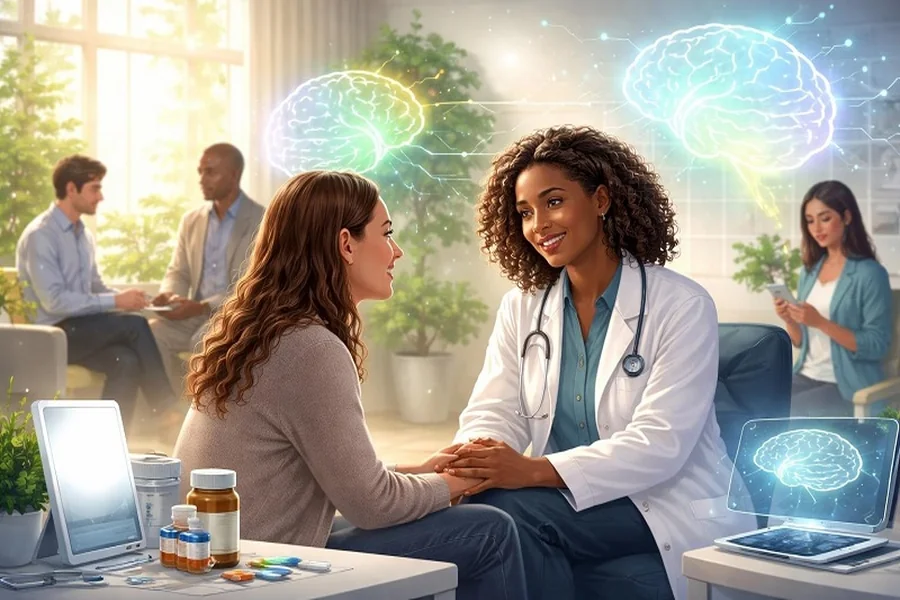
Depression affects millions of people worldwide, and for many years, treatment options remained largely limited to traditional talk therapy and standard antidepressant medications. While these approaches work well for some individuals, a significant portion of those living with major depressive disorder and other mood disorders continue to struggle without adequate relief. This gap in effective care has driven researchers and clinicians to develop innovative solutions.
Recent advancements in depression treatment are introducing new methods that show promise for individuals who haven’t responded to conventional approaches, including brain stimulation therapies, novel medications with different mechanisms of action, and technology-assisted care models. These developments represent a shift in how mental health professionals understand and treat depressive disorders. The focus is moving toward more targeted interventions that address the complex biological and psychological factors underlying each person’s condition.
The landscape of depression treatment is expanding beyond one-size-fits-all solutions. Emerging approaches combine cutting-edge science with personalized care strategies, offering renewed possibilities for those who have struggled to find effective treatment. Understanding these new methods can help patients and their families make informed decisions about mental health care options.
Cutting-Edge Treatment Methods for Depression
Modern depression care has expanded beyond traditional antidepressants to include fast-acting medications like ketamine and esketamine, advanced brain stimulation techniques, and psychedelic-assisted therapies that target novel pathways in the brain.
Rapid-Acting Antidepressants: Ketamine and Esketamine
Ketamine for depression represents a significant breakthrough in treating severe depression and treatment-resistant depression. Unlike traditional antidepressants that can take 6 weeks to work, ketamine and its derivative esketamine produce effects within hours or days. Originally used in anesthesia, ketamine works through the glutamate system rather than serotonin pathways.
Esketamine, marketed as a nasal spray, received FDA approval specifically for treatment-resistant depression. Patients typically use it in a clinical setting under medical supervision. Research shows it can rapidly reduce suicidal ideation in crisis situations.
The mechanism involves a ketamine metabolite that may restore neural connections damaged by chronic stress and depression. Randomized controlled trials demonstrate both efficacy and tolerability, though patients require monitoring during treatment sessions.
Innovative Brain Stimulation Therapies: TMS, TBS, and ECT
Transcranial magnetic stimulation (TMS) uses magnetic fields to stimulate specific brain regions without surgery or anesthesia. TMS therapy has proven effective for patients who haven’t responded to medications. Standard treatment involves daily sessions over 6 weeks.
Theta burst stimulation (TBS) offers a faster alternative, delivering treatment in just 5 days with multiple daily sessions. Research from UCLA shows this high-intensity approach achieves comparable results to traditional TMS protocols.
Electroconvulsive therapy (ECT) remains the most effective option for severe depression, particularly when rapid response is critical. Modern ECT techniques have improved safety and reduced side effects compared to earlier methods.
These non-invasive brain stimulation methods provide alternatives for patients who cannot tolerate medications or need faster symptom relief.
Psychedelic-Assisted Therapy and Emerging Agents
Psilocybin and other psychedelic compounds are showing remarkable potential in clinical trials. Psychedelic-assisted therapy combines these agents with structured psychological support to produce lasting changes in mood and thought patterns.
Network meta-analysis of multiple studies indicates psilocybin can produce rapid and sustained improvements in depression symptoms. The treatment typically involves one or two guided sessions rather than daily medication.
These new treatments for depression work through different mechanisms than conventional approaches, targeting brain networks involved in emotional regulation and self-perception. Clinical trials continue to evaluate their efficacy and safety profiles in controlled settings.
Mental health treatment is expanding as researchers identify novel therapeutic targets and delivery methods that offer hope for patients with limited options.
Personalized Approaches and the Future of Depression Treatment
Depression treatment is shifting from standardized protocols to individualized care strategies that account for genetic profiles, brain imaging data, and personal health histories. Modern approaches combine biomarker analysis with digital tools to optimize treatment selection and improve outcomes for patients who haven’t responded to traditional antidepressant medications.
Precision Psychiatry and Biomarkers in Treatment Selection
Precision psychiatry uses biological, clinical, and environmental data to match patients with the most effective treatments. Brain imaging techniques and genetic profiling help clinicians identify which patients will respond best to specific antidepressant medications versus psychotherapy approaches like cognitive therapy or behavioral therapy.
Biomarkers provide measurable indicators that guide treatment selection. These include genetic variations affecting how individuals metabolize medications, neurotransmitter levels such as serotonin, and brain activity patterns associated with neuroplasticity. A patient’s biomarker profile can reveal whether they’re likely to benefit from medications like lithium or whether psychotherapy will produce better treatment outcomes.
This approach addresses a longstanding challenge in mental health care. Rather than cycling through multiple antidepressant medications through trial and error, precision psychiatry tools help identify optimal treatments earlier in the care process, reducing the time patients spend with inadequate symptom relief.
Integration of Digital Health and Telepsychiatry
Mental health apps and telepsychiatry platforms are expanding access to personalized treatment plans while providing real-time monitoring of patient progress. Digital tools track mood patterns, sleep quality, and anxiety symptoms, generating data that clinicians use to adjust treatment approaches quickly.
Telepsychiatry removes geographical barriers to specialized care. Patients can access psychiatrists and therapists who offer evidence-based cognitive therapy and behavioral therapy without traveling long distances. This accessibility proves particularly valuable for individuals in rural areas or those with mobility limitations.
Key digital health features include:
- Symptom tracking and mood monitoring
- Medication reminders and adherence support
- Crisis intervention resources
- Secure messaging with healthcare providers
- Integration with wearable devices for activity and sleep data
These technologies support both psychotherapy and medication management, creating comprehensive personalized treatment plans that adapt as patients progress through recovery.
https://share.google/TJhw2zGoAYowNxHDy