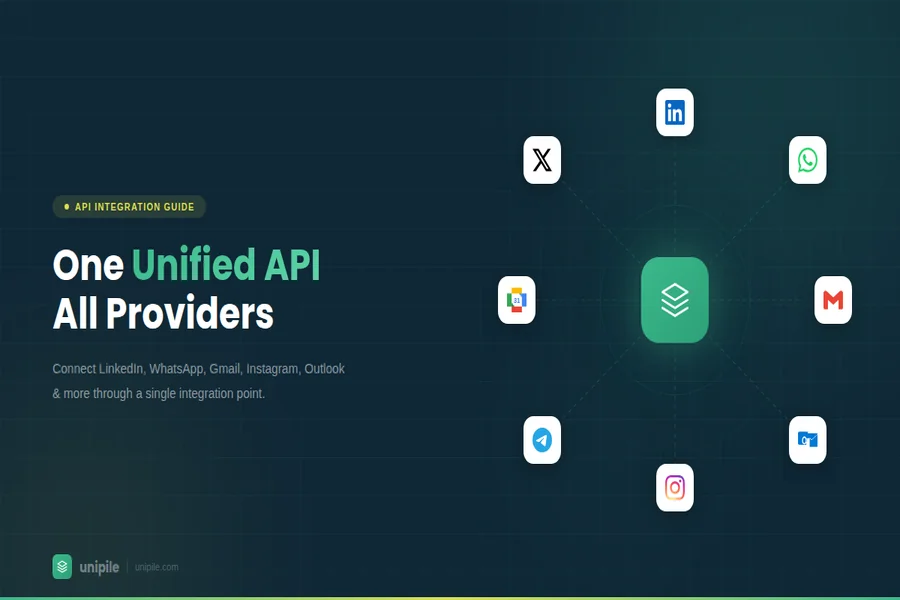
LinkedIn has implemented increasingly restrictive policies around API access, creating significant challenges for organizations that need to integrate LinkedIn data into business systems. LinkedIn’s decision to close public API access in 2015 meant that only officially designated partners receive API credentials, a program that operates with limited capacity and extensive restrictions. Organizations seeking to integrate LinkedIn for recruiting, sales, or business development find themselves blocked from official access channels or facing multi-month approval processes with uncertain outcomes. Unipile provides a practical alternative that delivers linkedin api access and integration capabilities without navigating LinkedIn’s partner approval gauntlet. By leveraging Unipile’s LinkedIn integration, organizations can immediately begin pulling profile data, managing message conversations, and building sophisticated recruiting and sales workflows without partnership agreements or extended approval waits.
Contents
- 1 The Challenge: LinkedIn’s Restricted API Landscape
- 2 The Partner Program Reality: Slow, Restrictive, and Uncertain
- 3 Unipile as the Practical Alternative
- 4 Multi-Account LinkedIn Management
- 5 LinkedIn Activity Limits and Realistic Operational Parameters
- 6 Comprehensive Data Extraction and Profile Analysis
- 7 Compliance with LinkedIn Terms and Ethical Considerations
- 8 Strategic LinkedIn Integration for Business Growth
The Challenge: LinkedIn’s Restricted API Landscape
LinkedIn’s decision to restrict API access represents a significant shift from earlier platform openness. When LinkedIn closed its public API in 2015, thousands of applications lost access to profile data, connection information, and messaging capabilities. The only pathway to LinkedIn integration now requires participating in LinkedIn’s Partner Program, an extremely selective initiative with high barriers to entry. Organizations must demonstrate specific business value, meet LinkedIn’s vague requirements, and undergo an approval process where rejection feedback lacks specificity about remediation steps. Companies often apply multiple times, invest significant effort customizing applications to meet perceived requirements, and still face rejection.
The LinkedIn Partner Program’s restrictive nature stems from LinkedIn’s business strategy of monetizing data access and protecting user privacy through careful control of third-party access. While these motivations have merit, the practical impact is that legitimate business use cases often cannot find official pathways to LinkedIn integration. Recruiting departments cannot build systems that pull candidate profile data into applicant tracking systems. Sales teams cannot automate outreach workflows that leverage LinkedIn connection data. Researchers cannot ethically access LinkedIn data for studying professional networks. These reasonable business needs conflict with LinkedIn’s official restrictions.
The Partner Program Reality: Slow, Restrictive, and Uncertain
Organizations that do pursue LinkedIn’s Partner Program quickly discover that approval timelines stretch across months with no guarantee of eventual acceptance. Applications enter queues where they await review by LinkedIn team members who may lack context about specific business needs. Follow-up communications receive generic responses directing applicants back to documentation they’ve already reviewed. Organizations invest significant engineering effort building applications that comply with LinkedIn’s published requirements, only to learn that unstated expectations existed all along. The uncertainty and sluggish timelines make LinkedIn Partner Program applications unreliable for businesses with concrete timelines.
Even organizations that successfully obtain Partner Program approval discover that restrictions on approved use cases often exceed what they anticipated. API rate limits may be insufficient for actual business needs. Certain data fields might be unavailable to approved partners. Approved use cases might be narrowly defined, preventing the flexible application of LinkedIn data that organizations require. Organizations that invested significant effort to gain approval may find that the actual capabilities fall short of requirements, forcing them to seek alternative solutions anyway after months of waiting.
Unipile as the Practical Alternative
Unipile provides immediate access to LinkedIn integration capabilities without navigating partnership approval processes or encountering use case restrictions. Organizations connect LinkedIn accounts through straightforward authentication mechanisms and immediately gain access to profile data, message history, and activity feeds. This rapid access enables recruiting teams, sales departments, and business development professionals to begin integrating LinkedIn data into their workflows immediately. Rather than waiting months for approval decisions or dealing with rejection, organizations can activate LinkedIn integration within days using Unipile.
The practical advantage of choosing Unipile over the official LinkedIn Partner Program is that approval uncertainty disappears entirely. Organizations know exactly when they’ll achieve working LinkedIn integration: within days of starting the project. Timeline predictability enables proper project planning, allows business units to schedule initiatives that depend on LinkedIn integration, and removes the risk that projects get delayed indefinitely waiting for partnership approvals. For organizations with concrete business timelines, Unipile’s immediate access represents an enormous advantage over waiting for official partnerships.
Multi-Account LinkedIn Management
Modern organizations often operate multiple LinkedIn accounts across different business units, brand properties, or regional offices. Managing these accounts through traditional interfaces requires significant manual effort. Teams struggle to maintain consistency, track activities across accounts, and ensure that qualified messages and outreach follow appropriate protocols. Unipile provides unified management of multiple LinkedIn accounts through a single integration point, allowing organizations to implement centralized workflow management while respecting different account purposes and governance requirements.
The multi-account management capability becomes particularly valuable for recruiting organizations managing multiple employer brand accounts or different divisions. Recruiters can access all relevant accounts from a centralized system, search for qualified candidates across all accounts, and coordinate outreach efforts. Sales teams operating across regions can manage region-specific LinkedIn accounts while maintaining consistent messaging and activity tracking. The unified interface that Unipile provides enables sophisticated account management strategies that would require significant manual coordination if handled through LinkedIn’s native interfaces.
LinkedIn Activity Limits and Realistic Operational Parameters
Organizations implementing LinkedIn integration need to understand realistic activity limits imposed by LinkedIn’s system to avoid account restrictions or service interruptions. LinkedIn enforces limits on connection invitations, typically allowing 80-100 invitations per day, and restricts direct messaging to approximately 100-150 messages per day. These limits exist to prevent spam and abuse, and organizations that exceed them risk account suspension or other restrictions. Unipile respects these limits, implementing safeguards that prevent integrations from exceeding daily thresholds. This responsible approach to rate limiting protects organizations from account restrictions that would result from uncontrolled outreach.
Understanding and operating within these limits is essential for sustainable LinkedIn integration. Organizations should design outreach campaigns that respect daily limits while still achieving business goals across longer timeframes. Spreading invitations and messages across weeks enables substantial outreach volumes without triggering restrictions. Unipile’s integration provides visibility into current activity levels, enabling teams to monitor their usage and adjust activities to remain within safe parameters. This disciplined approach to LinkedIn activity ensures that integrations remain reliable over time.
Comprehensive Data Extraction and Profile Analysis
Unipile enables organizations to extract comprehensive data from LinkedIn including profile information, company details, connection relationships, and activity feeds. Recruiting departments can pull candidate profile data into applicant tracking systems, enabling sophisticated candidate evaluation and tracking. Sales teams can extract prospect company information, identify decision makers, and track engagement history. Business development professionals can analyze professional networks and identify partnership opportunities. The rich dataset that Unipile provides enables analytical and operational use cases that weren’t possible with previous restrictions.
The ability to access search results through LinkedIn integration enables sophisticated targeting and segmentation. Organizations can build candidate pipelines by searching for professionals matching specific criteria, pulling their profile information, and feeding it into recruitment workflows. Sales teams can identify prospects matching ideal customer profiles and extract contact information for outreach. This data extraction capability transforms LinkedIn from a manual networking tool into a systematic source of business intelligence and operational data.
Compliance with LinkedIn Terms and Ethical Considerations
While Unipile provides alternative access to LinkedIn capabilities, organizations must recognize that LinkedIn’s terms of service prohibit certain types of data extraction and use cases. Unipile operates within these constraints, avoiding circumvention of LinkedIn’s security measures or violation of explicit terms prohibitions. Organizations should review LinkedIn’s terms of service carefully and ensure that their use cases align with LinkedIn’s stated policies. Responsible integration means respecting LinkedIn user privacy, following anti-spam principles, and conducting outreach through channels that LinkedIn supports.
The ethical dimension of LinkedIn integration extends beyond simple terms of service compliance. Users who receive outreach through LinkedIn integrations should experience that outreach as legitimate professional communication, not spam or manipulation. Messages should be personalized, relevant, and respectful of users’ professional goals and communication preferences. Organizations that treat LinkedIn integration as a spam channel risk damaging their professional reputation and triggering account restrictions. Unipile supports responsible integration practices by respecting activity limits and enabling organizations to implement thoughtful, respectful LinkedIn strategies.
Strategic LinkedIn Integration for Business Growth
Organizations that approach LinkedIn integration strategically can build powerful systems that support recruiting, sales, and business development initiatives. Recruiting systems that integrate candidate sourcing, profile analysis, and outreach tracking enable efficient talent acquisition. Sales teams that systematize LinkedIn-based prospecting, relationship development, and deal tracking can substantially increase revenue. Business development professionals can formalize partnership identification, contact management, and opportunity tracking. Strategic integration transforms LinkedIn from a manual networking tool into a systematic business development platform.
Unipile’s LinkedIn integration enables organizations to move beyond reactive LinkedIn usage toward proactive, systematic approaches to professional networking and business development. Organizations can design workflows that automatically identify qualified prospects, manage outreach campaigns responsibly, and track engagement across large contact bases. The scalable approach to LinkedIn integration that Unipile provides enables organizations to apply professional networking at the organizational level rather than limiting it to individual effort. This transformation enables substantial business impact by multiplying the effectiveness of recruiting, sales, and development efforts across the entire organization.


