
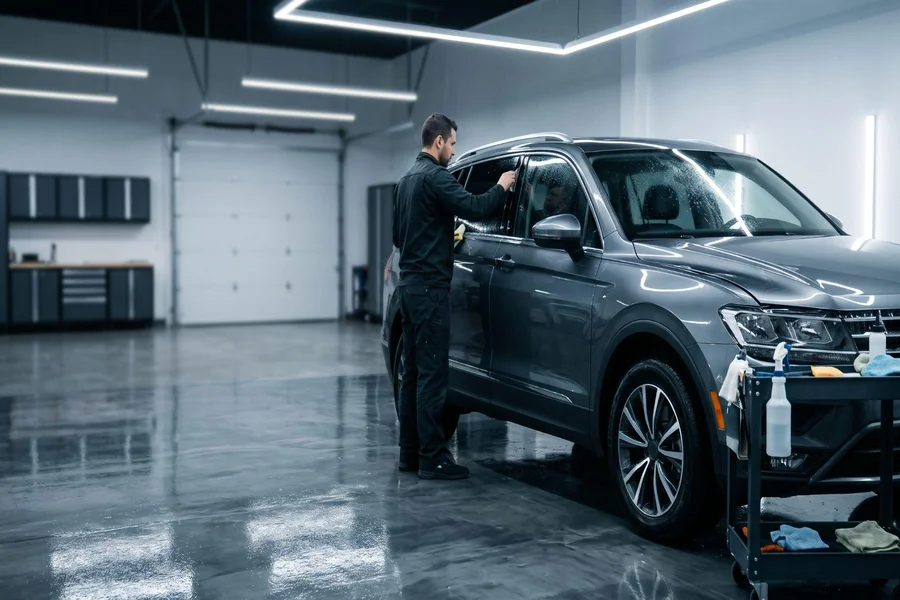
A new vehicle needs protection from the first day you drive it home. Sun, heat, rock chips, and harsh weather start wearing it down immediately. Fortunately, window tint and paint protection film (PPF) can keep your car looking new for years.
However, film quality, installer skill, and warranty coverage vary widely. Below, you’ll learn how to choose the right film, installer, and warranty for your new car.
Why Your New Vehicle Needs Window Tint and PPF
Window tint and PPF solve two different problems. Tint protects the cabin, while PPF protects the paint. Together, they keep your car comfortable, glossy, and valuable.
Quality window film blocks up to 99% of harmful UV rays. As a result, it protects your skin and stops dashboards and leather seats from fading. It also cuts heat and glare, so your air conditioning works less.
PPF, on the other hand, forms an invisible shield over your factory paint. It absorbs rock chips, light scratches, bug acids, and bird droppings. In addition, protected paint helps your vehicle hold a stronger resale value.
Understanding Your Window Tint Options
Window films fall into four main types, and each one balances price, clarity, and performance differently.
Dyed and Metallic Window Film
Standard dyed film costs the least and gives a dark, private look. However, it absorbs heat instead of rejecting it, and it can fade over time. Metallic film reflects heat well, but it may disrupt GPS, radio, and phone signals.
Carbon Window Film
With carbon film, you get a matte finish and solid heat rejection. Moreover, it resists fading and contains no metal, so your signals stay clear.
Ceramic Window Film
Many installers rank ceramic film as the top choice for new vehicles. It uses nano-ceramic particles to block infrared heat without making the glass too dark. Consequently, you enjoy a cooler cabin, clear night visibility, and zero signal interference. For most drivers, ceramic tint delivers the best long-term value.
Key Factors for Choosing the Right Window Tint
Darkness alone tells you little about performance, so compare these factors before you buy.
Local Tint Laws and VLT
Every state or country sets its own limits on visible light transmission (VLT). A lower VLT percentage means a darker film. Front side windows and windshields usually face the strictest rules. Therefore, confirm the legal limit before you pick a shade.
Heat Rejection Ratings
Next, look past the shade and study the performance data. Focus on infrared rejection (IRR) and total solar energy rejected (TSER). In fact, a light ceramic film can outperform a much darker dyed film. To compare real numbers, review this guide to the best window tint brands leading the market today.
Clarity and Signal Compatibility
Premium film keeps your view crisp, especially at night and in the rain. It also works smoothly with GPS, Bluetooth, and mobile signals. Cheap film, however, can haze, bubble, or turn purple within a few years.
What Makes a High-Quality Paint Protection Film
Paint protection film is a clear urethane layer that bonds directly to your paint. Still, PPF quality differs a lot from one manufacturer to the next. A side-by-side review of the best PPF brands reveals big gaps in finishes and warranty length. Look for these features to separate premium films from cheap imitations.
Self-Healing Topcoat
A self-healing topcoat makes light swirls and fine scratches disappear with heat. Sunlight, warm water, or a heat gun usually does the job. Thus, your finish stays smooth without constant polishing.
Clarity, Gloss, and Stain Resistance
Great film looks almost invisible on your paint. It should also resist yellowing, staining, and water spots over the years. Plus, a hydrophobic surface helps water and dirt slide right off.
Thickness and Conformability
Many premium films measure about 8 mils thick. Thicker film absorbs more impact, yet it must still wrap tightly around curves and edges. Ask how the film handles bumpers, mirrors, and other complex panels.
Coverage Options
Most owners start with a full front package that covers the bumper, hood, fenders, and mirrors. Daily highway drivers often add rocker panels and door edges. Meanwhile, full-body coverage offers the most complete protection for high-value vehicles.
Color PPF vs Car Wraps: Which Suits Your Style?
Both options can change your car’s color, but they protect it very differently.
Vinyl car wraps cost less and come in countless colors, prints, and textures. However, thin vinyl offers limited defense against rock chips and deep scratches.
Color PPF, by comparison, blends bold styling with real paint protection. It uses the same thick, self-healing urethane as clear PPF, but adds rich color. You can choose gloss, matte, satin, or metallic finishes. Therefore, color PPF suits drivers who want a fresh look and serious protection in one product.
If you love your factory color, matte clear PPF offers another route. It turns glossy paint into a smooth satin finish while protecting it.
Why TERMINAX Belongs on Your Shortlist
One brand worth a close look is TERMINAX, which covers nearly every surface of a modern vehicle. Its Ceramic-X™ nano-ceramic window film blocks at least 99% of UV rays, according to the brand. It also rejects infrared heat without forcing you into a dark shade.
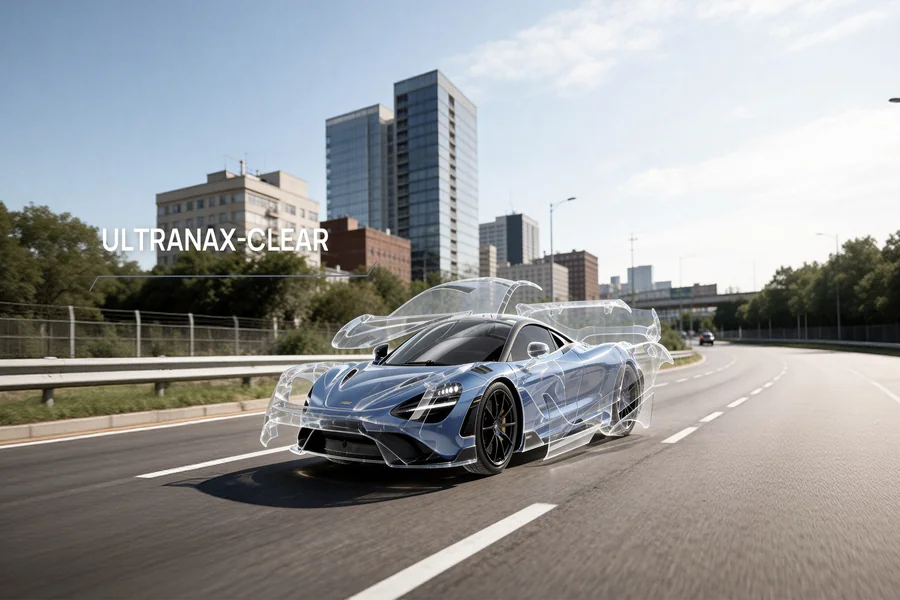
On the paint side, UltraNAX™ clear PPF offers gloss, matte, and satin finishes with a self-healing topcoat. TERMINAX backs UltraNAX with a warranty of up to 12 years. Meanwhile, Chroma-X™ color PPF comes in more than 100 colors and carries a 10-year warranty.
The brand also makes Carbon-X™ fiber PPF, Lamp-X™ light film, and Windshield-X™ protection film. As a result, you can protect your paint, glass, and lights under one trusted name.
Professional Installation and Warranty Coverage
Even the best film fails without skilled installation. Poor workmanship leads to bubbles, lifting edges, dust specks, and visible seams. For this reason, choose a certified installer with a strong portfolio.
Ask to see recent work and read customer reviews before you book. Also, confirm exactly what the warranty covers and for how long.
Premium PPF warranties often run from 5 to 12 years, depending on the product. Good window film warranties cover fading, bubbling, peeling, and cracking. Above all, make sure both the manufacturer and the installer stand behind the job.
Quick Checklist Before You Buy
- Confirm the legal VLT limits for every window.
- Choose ceramic window film for top heat rejection.
- Pick a PPF with a self-healing, stain-resistant topcoat.
- Decide between clear PPF, color PPF, or a vinyl wrap.
- Compare warranty length and coverage details.
- Book a certified installer with a proven track record.
Final Thoughts on Window Tint and PPF
Choosing window tint and PPF comes down to quality, fit, and long-term support. Start with ceramic window film for comfort, clarity, and UV defense. Then, add a self-healing PPF to guard your paint against daily wear.
If you want a new look, consider color PPF instead of a basic vinyl wrap. Finally, pair a trusted brand like TERMINAX with a certified installer. With the right combination, your new vehicle will stay cool, glossy, and protected for years.