
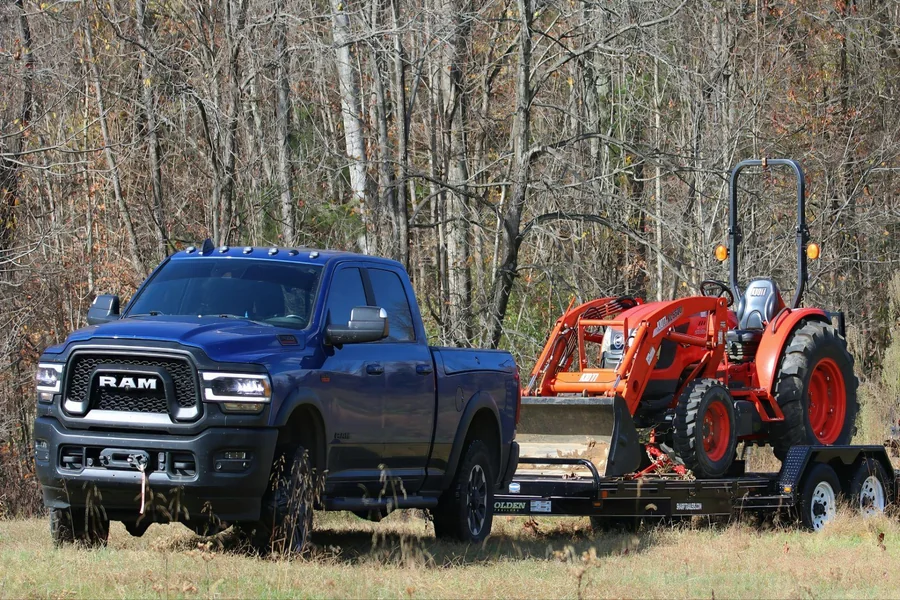
You would expect a diesel pickup to have the pulling power to tow, accelerate smoothly in daily traffic, and control its speed when descending a hill. Those jobs seem unrelated, yet one component can support both. On engines equipped with a variable-geometry turbocharger (VGT), an actuator helps manage airflow during acceleration and exhaust resistance during engine braking. Adapting the turbocharger on the fly to match changing driving conditions.
One Small Part, Two Very Different Jobs
A conventional turbocharger uses exhaust energy to compress fresh air entering the engine. A VGT adds an adjustable nozzle mechanism around the turbine. The actuator moves that mechanism according to commands from the engine control module (ECM).
For example, Wisent Parts Center lists the R8481772AA Turbocharger Actuator for select Cummins ISB 6.7L applications. Its purpose is not to generate power or apply the brakes directly. It positions the turbocharger’s control mechanism so the engine can use exhaust flow differently as conditions change.
How It Helps Your Truck Accelerate
When a driver presses the gas pedal at low engine speed, a VGT can narrow the passage carrying exhaust toward the turbine. That raises exhaust-gas velocity and helps the turbocharger build boost sooner. More compressed intake air allows more fuel to be burned to produce torque.
As speed and load increase, the ECM signals the actuator to open the turbo vanes. This would make the boost pressure steady and controlled and prevent overspeeding. While this makes acceleration feel much sharper, the actuator doesn’t create power on its own. It simply optimizes airflow. Your truck still relies on proper fuel delivery, a healthy engine, and the rest of the air system to actually make that power.
How It Helps Slow the Truck
On trucks equipped with a VGT exhaust-brake function, the same adjustable mechanism serves a second purpose. When engine braking is requested, the control system changes nozzle position to increase exhaust backpressure. The engine must work against that resistance, helping reduce vehicle speed, especially on long descents. This is engine-assisted braking, not the action of the wheel brakes, your regular brakes remain essential for stopping.
Warning Signs Worth Investigating
Because the actuator participates in both functions, a control problem may show up in different ways:
- Sluggish response or unexpectedly low boost during acceleration.
- Inconsistent boost pressure or reduced engine power.
- Weak or missing exhaust-brake assistance when selected.
- Turbocharger-related fault codes or warning lights.
These symptoms do not automatically mean the actuator has failed. A sticking nozzle, wiring fault, intake leak, or calibration problem can produce similar behavior.
Why Correct Fitment and Calibration Matter
Electronic turbo actuators are application-specific. A replacement must match the turbocharger and engine control system, not look similar. Verify the original part number, engine serial number, and vehicle details.
One actuator can help your diesel truck accelerate and slow down simply by shifting how the turbocharger handles exhaust in each situation. Keeping that dual role in mind makes it much easier to troubleshoot performance issues and helps you avoid replacing parts you don’t actually need.