
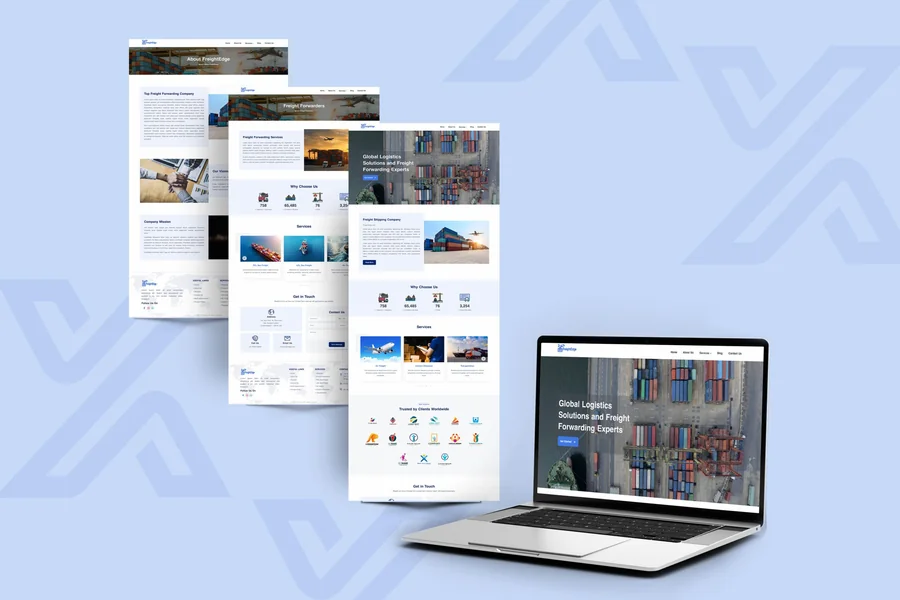
Why Logistics Companies Need Specialized Websites
Many logistics providers choose a dedicated logistics company website development partner to build platforms that combine marketing, operations, and client portals into a single, secure ecosystem. A specialist team understands freight workflows, carrier integrations, and the performance demands of real‑time tracking, ensuring the website supports both sales and service objectives.
Core Capabilities of Logistics Websites
A well‑built logistics site does more than present services — it automates routine tasks and connects systems. Key capabilities include secure client logins, shipment tracking, rate calculators, and integrations with carriers and customs systems. These features reduce friction for customers and internal teams alike.
Businesses that move goods depend on more than trucks and warehouses — they rely on digital systems that coordinate routes, track shipments, and communicate with customers. A modern logistics website is a frontline tool for operations, sales, and customer service, turning complex processes into clear, actionable experiences.
Shippers and carriers face unique challenges: real‑time tracking expectations, regulatory documentation, and integrations with TMS and ERP systems. A generic template site rarely meets these needs; logistics firms benefit from tailored development that reflects operational realities.
Search visibility matters for local and regional carriers. When procurement teams search for freight partners, a professional website that highlights services, certifications, and case studies builds credibility and shortlists vendors for RFPs.
User experience extends beyond marketing pages. Portals for clients, driver apps, and automated quoting tools reduce manual work and speed up conversions. Thoughtful UX design reduces support calls and shortens sales cycles.
Security and compliance are non‑negotiable. Handling shipment data, customer PII, and payment information requires secure architectures, encrypted communications, and audit trails that satisfy enterprise buyers.
Scalability is essential as volumes fluctuate. Cloud‑native architectures and modular integrations let logistics companies add lanes, carriers, or new services without a full rebuild.
Key Features to Prioritize
- Real‑time shipment tracking and status updates
- Automated quoting and rate calculation tools
- Client portals with document management
- API integrations with TMS, carriers, and customs
- Mobile‑friendly interfaces for drivers and dispatchers
Design and UX Considerations
Clarity is paramount: dashboards should surface the most important metrics at a glance, while quoting flows must minimize required inputs. For B2B buyers, trust signals — certifications, insurance details, and client testimonials — should be prominent and easy to verify.
Global Trends in Logistics
Modern logistics companies operate in an environment of globalization and increasing customer demands. The website must support multiple languages, account for the specifics of international shipping, and provide tools for calculating rates in different currencies. This makes the platform convenient for international customers and partners.
Integration with E-commerce and Marketplaces
Logistics is closely linked to e-commerce. Modern websites must offer ready-made integrations with Shopify, Amazon, eBay, and other platforms. This allows for automating the delivery process, synchronizing orders, and providing customers with transparent tracking directly from the store.
Analytics and Reporting
In addition to basic functions, a website can serve as a business analytics tool. Built-in dashboards allow you to track KPIs such as delivery time, delay rates, and vehicle utilization. These analytics help managers make informed decisions and optimize processes.
Technical Architecture and Integrations
Choose a modular architecture that separates presentation, business logic, and integrations. Microservices or well‑structured APIs make it easier to connect to carrier networks, payment gateways, and third‑party verification services without disrupting the customer experience.
Security, Compliance, and Performance
Implement role‑based access, encrypted data storage, and secure API gateways. Regular penetration testing and compliance checks (e.g., SOC 2) reassure enterprise clients. Performance tuning and CDN usage ensure tracking pages and dashboards remain responsive under load.
Investing in logistics company website development transforms a digital presence into an operational asset. By combining domain‑specific features, secure integrations, and user‑centered design, logistics firms can improve efficiency, win more contracts, and deliver better service to customers and partners.