
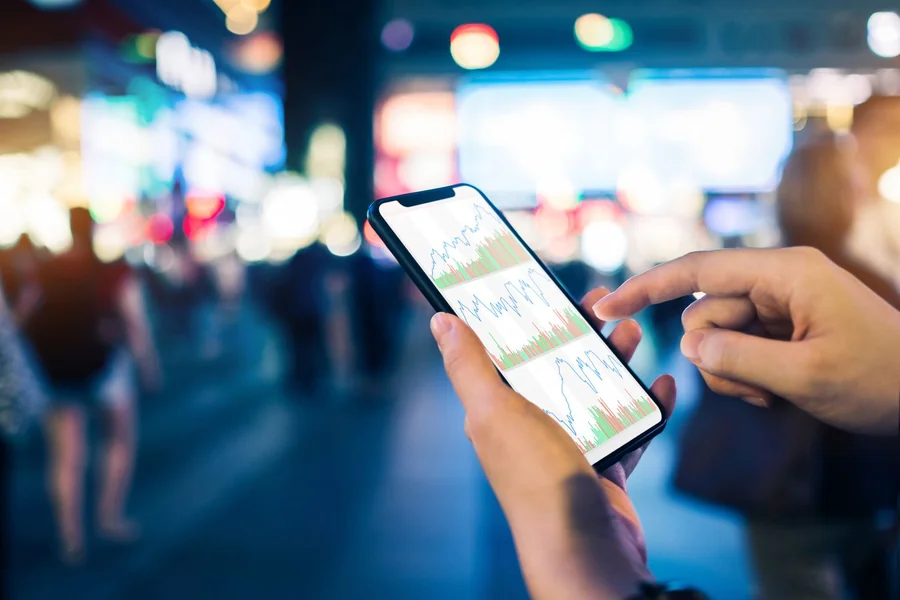
In times gone by, individuals monitored the stock exchange just once a day, read the daily newspaper, or watched the evening news for new information. Information is available on a 24/7 basis these days. Prices change in real time, Facebook updates trending moments each minute, and digital dashboards update before we’ve even finished reading the last numbers. From the stock market, sports, and the cryptocurrency charts to website analytics, millions of people have become accustomed to seeing numbers almost all the time. Interestingly, this is not the only behaviour by investors or analysts. It’s easy for anyone with a cell phone to get involved in real-time metrics.
Why Humans Are Drawn to Patterns
Why Humans Are Drawn to Patterns The brain is capable of spotting patterns even without spreadsheets and indexes. Early humans survived by watching the small changes in their environment, like the weather, animal behaviour, or seasons. This same brain wiring now stimulates us to look for meaning in speed-changing digital information.
This pattern recognition can be very successful but also develops a cognitive bias. We are all guilty of assuming that every fluctuation in something has a cause and/or that the recent trends are going to persist forever. A trend of increasing prices, users or statistics can be of a meaningful trend even if there is a high degree of randomness.
The feel-good factor of watching live metrics: we’re getting better at predicting. But in truth we’re not necessarily getting better at forecasting; we’re getting better at observing.
Dopamine Loves Anticipation More Than Rewards
The biggest mistake about dopamine is believing that it’s a reward for success.There is another story in neuroscience. Dopamine is very reactive to the expectation. Anticipating a desirable event has proven to stimulate motivational processes more strongly than the event itself.This is why it is so satisfying to launch a market app, look at social engagement figures or see the live leaderboard. The brain likes the opportunity to learn something new.
This establishes a dopamine loop in the brain, which is exactly what psychologists would call it:
- Expect new information.
- Check for updates.
- Have a mini-emotional reaction.
- Repeat the process.
- Uncertainty remains, and it goes on the cycle.
Variable Rewards Keep Attention Locked
The idea of “variable rewards” is one of the biggest contributors to digital engagement.
If all the refreshes were identical, no one would be interested in viewing them. Rather, updates are random.
- Sometimes prices surge.
- They sometimes drop sharply.
- Sometimes there is no reaction.
The more unexpected it is, the more it makes monitoring even more interesting. The power of intermittent reinforcement in creating long-term habits is shown by behavioural psychology. The brain is constantly scanning because the next update may be important. This process can be seen in a vast number of digital ecosystems, such as financial markets, news feeds, sports apps, streaming platforms, and numerous entertainment platforms.
Why Digital Platforms Encourage Constant Checking
Modern products, which are of a digital nature, are well planned and created with the purpose of engaging. Live notifications, tailored recommendations, progress bars, achievement systems, trending lists and performance dashboards all help to drive repeat visits.
Each and every update brings something new:
- a higher ranking
- increased traffic
- changing statistics
- fresh content
- unexpected movement.
One little chance at a time is another chance to check. The outcome is a digital world where attention is a resource.
Interactive Digital Ecosystems and Continuous Feedback
Many online platforms make it a point to offer ongoing feedback because it makes people feel they’re making progress.
- Achievement badges.
- Daily streaks.
- Performance histories.
- Personal statistics.
- Progress bars.
These elements establish clear goals and leave an element of uncertainty about future outcomes.
For instance, entertainment websites like Safe Casino Poland provide their visitors with new information, statistics and interactive interfaces, which allow users to observe but not participate. Likewise, real money casino in the region are integrating real-time updates, customisable dashboards, and interactive information feeds to maintain user engagement. The examples are not unique to any particular industry but are examples of trends in digital engagement.
Expert Assessment: Understanding the Habit Instead of Fighting It
In neuroscience, behavioural economics, and digital psychology, there’s an emerging consensus that it’s not a good thing or a bad thing to constantly monitor metrics. The problem with the habit is only when the desire for information overrules thoughtful decision-making. Experts say the first step to healthier digital engagement is to recognise the behaviours. By knowing how cognitive bias, instant gratification, dopamine loops, and variable rewards influence our attention, we can engage with digital information more deliberately and consciously, rather than just reacting automatically.