If you’ve spent more than five minutes looking into passive income, you’ve probably realized most of it is a scam. It’s usually “passive” in name only, which is really just a fancy way of saying you’ll be trading your weekends for a few extra dollars and a massive amount of stress. You see
the ads for dropshipping or “AI-powered” side hustles, and they all feel like you’re chasing a ghost. But there’s a specific way people are actually hitting that $1,000-a-month mark without losing their minds, and it usually comes down to keeping things dead simple.
I’ve been digging through DFY Vending Machines reviews and talking to guys who actually have machines in the field—people who have been doing this for six months to a year. The ones who are actually making money (I’m talking actual take-home profit, not just “gross revenue” vanity numbers) all seem to have figured out the same three things.
Stop selling stuff that rots
This is the single biggest mistake beginners make. They think “vending machine” and immediately think of Snickers bars, bags of chips, and bottles of Coke. That isn’t an investment; that’s a job.
If you sell food, you’re a slave to expiration dates. You’re constantly checking if the chocolate is melting in the summer heat or if the chips are going stale because they sat in the bottom coil for too long. If a building’s AC goes out over a long holiday weekend, you’re not just losing
sales—you’re literally throwing your profit into a trash bag when you arrive to find a machine full of “inventory soup.”
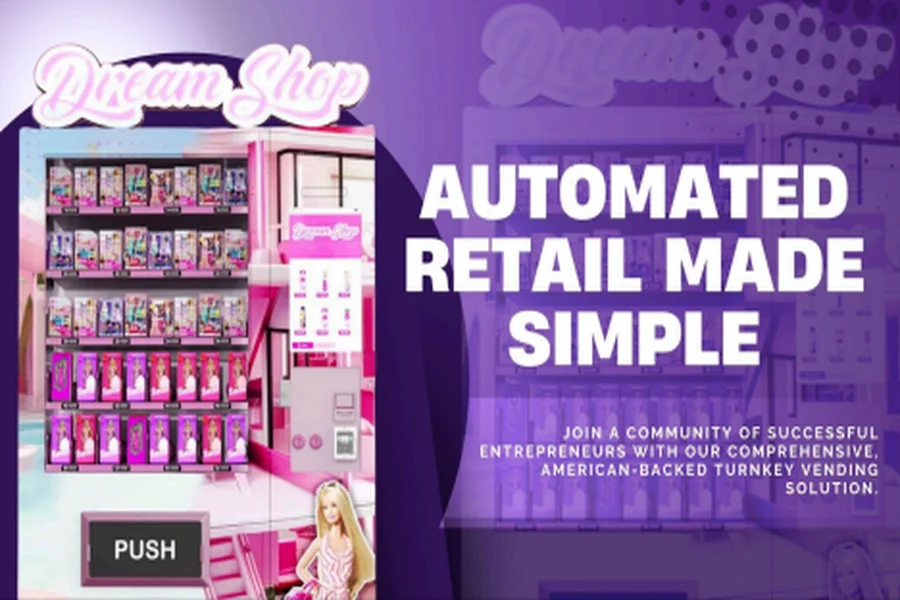
The people who are actually killing it right now have moved on to “hard goods.” I’m talking about Hot Wheels, NekoDrop collectibles, and mystery “blind boxes.” These things don’t expire. A die-cast car or a designer vinyl figure is just as valuable six months from now as it was the day you bought it.
This changes the entire rhythm of the business. You aren’t rushing to a machine on a Tuesday night because the milk is about to turn or the bread is getting hard. You go when your phone tells you the machine is low on stock. It turns a “high-maintenance” chore into a “low-maintenance” asset. When your inventory doesn’t rot, your stress levels drop to zero.
The Math of the “Blind Box” Craze
Let’s talk about why the “NekoDrop” and collectible model is making people so much more money than snacks. In a traditional snack machine, you’re fighting for nickels. You buy a bag of chips for $0.60 and sell it for $1.50. After the mall takes its 20% cut and the credit card processor takes their fee, you’re left with maybe $0.40 in profit. You have to sell a lot of chips to make $1,000.
But collectibles? That’s a different game. A “blind box” or a mystery figure might cost you $5 to $7 at wholesale, but you can sell it for $15, $20, or even $25 depending on the location and the rarity of the set.
There’s also a psychological “hook” that you just don’t get with food. Nobody buys a bag of pretzels and thinks, “Man, I hope there’s a rare pretzel in here!” But with blind boxes, the “unboxing” is part of the product. If someone buys a mystery toy and gets the “common” one, they often immediately tap their card to try again for the “rare” one. This “one more try” impulse is how a single customer can turn into $45 in revenue in under three minutes. That is how you hit $1,000 a month with just a few machines.
The “Location” Wall: Why You Can’t Do This Alone
You can have the coolest, most high-tech machine in the world, but if it’s in a dead corner of a laundromat or a quiet apartment basement, you’re going to make about five dollars a month. The hardest part of this entire business isn’t the machine—it’s the real estate.
Try calling up a major mall manager as an individual. Tell them you’re “Steven” and you have one machine you want to put in their food court. They’ll laugh you off the phone before you can finish your sentence. Big malls and high-traffic retail centers want to deal with professional entities. They want to see insurance, they want to see a history of reliability, and they want to know that if the machine leaks or breaks, someone will be there in an hour to fix it.
This is really where the “Done-For-You” model pays for itself. You’re not just buying a machine; you’re paying for their connections and their reputation. Getting a machine into a prime spot—near a cinema entrance, a busy food court, or a “destination” store like a LEGO shop—is a massive shortcut. It means you start with the foot traffic already there. You aren’t begging for
space; you’re just filling a spot that’s already been negotiated for you by a team that does this 40 hours a week.
Scaling Without the Headache
If you want to hit $1,000 a month in profit, you usually need more than one machine. In the old days of vending, owning five machines meant you had a full-time job. You were constantly driving, constantly checking dates, and constantly fixing coin jams.
But because modern machines sell hard goods that don’t go bad, five machines aren’t five times the work. Most of the successful owners I’ve talked to use a telemetry app to track everything from their couch. They know exactly what’s selling in real-time.
Imagine it’s a Saturday morning. You check your phone and see that your machine at the downtown mall is nearly sold out of the “Series 1” NekoDrop toys, but your machine at the suburban spot hasn’t moved a single one—instead, they’re buying all the Hot Wheels. You don’t have to guess what to pack in your bag. You load up exactly what’s missing, hit both spots in two hours, and you’re done for the next two weeks. It’s a data-driven business that fits into the gaps of your life rather than taking it over.
The “Sycophant” Trap: What the Gurus Won’t Tell You
I want to be clear here, because a lot of the marketing for this stuff is way too “sunshine and rainbows.” Is it actually passive?
Look, nothing is 100% passive unless you’re living off massive stock dividends or a trust fund. You still have to show up. You still have to wipe down the glass (because fingerprints and dust kill sales faster than a price hike). You still have to deal with the occasional tech glitch or a card reader that needs a reboot.
But compared to a traditional job—where you have a boss breathing down your neck and a commute that sucks the soul out of you—this is incredibly close to the dream.
- No Boss: You decide when you want to service the route. If you want to do it at 10 AM on a Tuesday, go for it.
- No Employees: It’s just you and the machine. No payroll, no drama, no one calling in sick.
- No Customer Service: The machine does the talking. If someone doesn’t like the price, they just don’t buy it. You don’t have to argue with them.
The Verdict
For a student looking for a way to pay for tuition, or a professional looking for a “bridge” out of the 9-to-5 grind, this is a legitimate path. It’s about taking a solid, proven machine, putting it where people are already spending money, and selling things they actually want to collect.
The people making $1,000+ a month aren’t doing anything magical. They just realized that snacks are for amateurs and data is for pros. They used a DFY service to jump the “location” hurdle, and they’ve spent their time focusing on the numbers rather than the candy bars. It’s a straightforward, “boring” business model—and in my experience, boring is usually where the actual money is hidden.