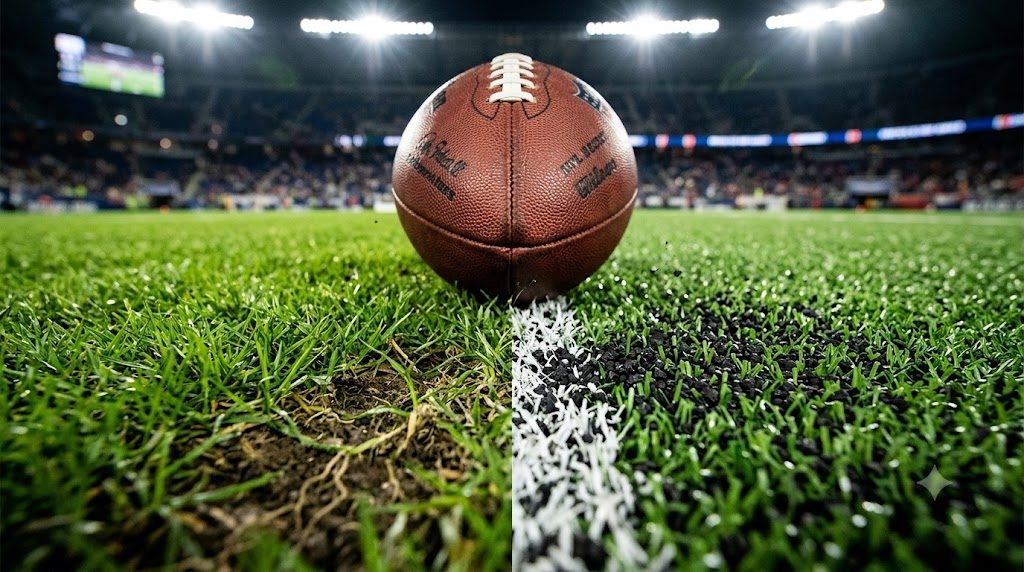
Few issues divide NFL players and owners like the playing surface. Players overwhelmingly say they prefer natural grass, while many teams, especially those in domes or in stadiums that host concerts and other events, keep synthetic turf. Here is where the debate stands in 2026 and what the evidence says.
Where the league stands
Heading into 2026, 16 NFL teams play on natural or hybrid grass and 16 play on synthetic turf, according to reports. The balance tipped when the Buffalo Bills moved into their new stadium, which was built with a natural grass field. The first sod installed there ran into problems, including fungus and drainage issues, and was reportedly replaced before the home opener. New natural-grass fields in difficult stadiums can be hard to establish, and the episode gave skeptics an argument.
The World Cup contradiction
Several NFL stadiums with synthetic turf, including MetLife Stadium, AT&T Stadium, Lumen Field and Mercedes-Benz Stadium, installed temporary natural grass for the 2026 FIFA World Cup, because FIFA requires natural grass for its tournaments. The installations showed grass can be grown in domes and covered stadiums, using temporary root-zone systems, lighting and drainage. After the tournament, most stadiums returned to turf, which drew criticism from players. Reported cost figures for the conversions vary and could not be independently confirmed, so they are omitted here.
What the injury evidence says
The safety case against synthetic turf rests on how the surface behaves. On grass, soil can give way when a cleat catches. On many synthetic surfaces, cleats grip more firmly, which can pass force to the ankle and knee. The NFL Players Association has long argued, citing injury data, that non-contact lower-extremity injuries occur more often on turf. The league’s own injury analyses have also generally found higher rates of some non-contact lower-body injuries on synthetic surfaces, though the size of the gap varies by year, turf product and injury type.
Footwear matters as well. Cleat design interacts with the surface, and the league and players’ union have worked on guidance for matching shoes to fields. Figures often cited in debates, such as specific injury multipliers, differ across studies and datasets, so it is best to treat any single number carefully.
The league’s testing plan
The NFL and the players’ union have developed surface testing for both safety and performance. Instruments such as the BEAST, a robotic leg that tests how much a surface grips a cleat, and impact devices that measure surface hardness, are used to evaluate fields. The league has said it will use this testing to hold stadiums to standards, and reports indicate a timeline that extends to 2028. Specific thresholds, deadlines and consequences should be confirmed against league announcements before being treated as final.
Better grass
Turf-grass science has progressed. Tahoma 31, a bermudagrass bred at Oklahoma State University, is more cold-tolerant than traditional bermudagrass and has been adopted by several NFL teams. Hybrid systems, which stitch synthetic fibers into natural turf to reinforce it, are also in use at some stadiums, including in Green Bay. These systems aim to provide a surface that stays stable in poor weather while keeping the give of natural turf.
Environmental pressure on synthetic fields
Many synthetic fields use crumb rubber infill made from recycled tires, which can get very hot on sunny days. The European Union has adopted a restriction on intentionally added microplastics under its REACH regulation, which will phase out the sale of polymer infill for synthetic turf, with the main deadline in October 2031. Alternatives include organic infills such as cork or wood-based products. Whether those changes affect US stadiums depends on how the industry adapts.
Surfaces and scoring
Fans who follow games closely often ask whether the surface affects scoring. Some studies find higher scoring on turf, but much of that effect disappears once indoor games are separated out, because dome and open-air games differ in weather conditions. Surface can matter more for the style of play, since synthetic fields tend to be faster, and for injury risk, which affects who is available. Analysts who study weekly NFL matchups, including those who follow odds and lines on platforms such as DraftKings, tend to treat surface as one factor among many, alongside weather, injuries and matchups.
The league also plays several games abroad this season, on stadium surfaces that vary and that teams may have little time to adapt to.
What happens next
Expect continued pressure from players, steady improvements in grass technology and tightening environmental rules. Owners still weigh these against the revenue from hosting other events. The outcome will likely come from testing standards, labor negotiations and the next high-profile injury, not from a single decision.
Sports betting is for adults 21 and over where legal. If gambling is a problem for you or someone you know, call 1-800-GAMBLER.