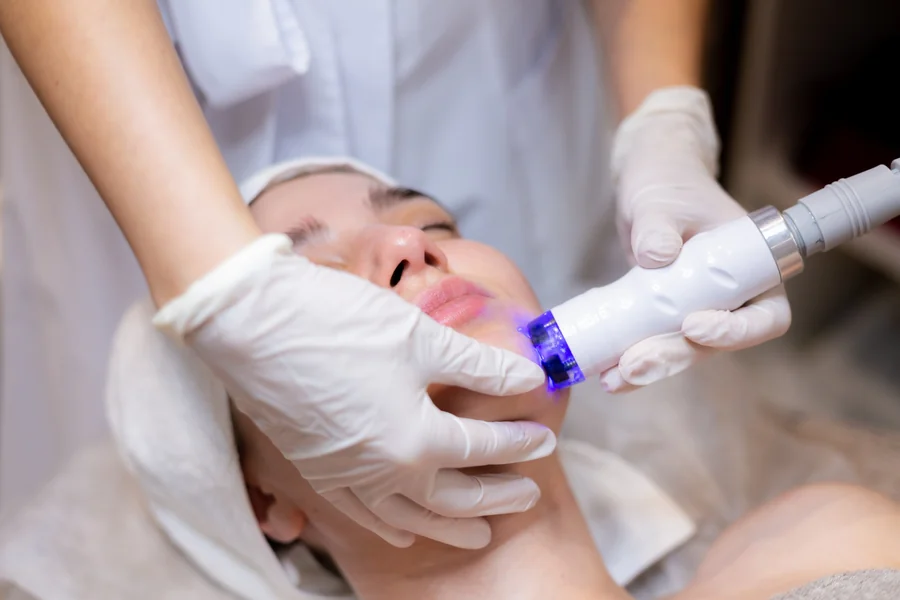
Try imagining this scenario: A client in her late thirties lies back on the treatment bed, and before the cleanser even goes on, she mentions the retinol she’s used on her cheeks and forehead for a year. Then she taps the outer corner of her eye. She mentions the lines there, but nobody’s touched that spot.
Perhaps a friend warned her once. She never questioned it. Twelve months of careful routine, and she skipped the one place she actually wanted help with.
Eye skin is thin. It reveals your sleep, and it reacts first. So people either avoid it completely or smear on whatever’s in the jar. Neither goes well.
Is retinol around eyes allowed? Mostly yes. But the yes comes with strings. They’re about formula, technique, and how your barrier is holding up that particular week. It’s not a universal ban.
Here’s how a skin professional would explain it.
Thin skin needs care
Eyelid skin is among the thinnest you’ve got. The patch under the eye isn’t far behind. Hardly any oil glands and barely any padding. Add thousands of blinks a day, a tug at the mascara, a rub when you’re tired, and you’ve got tissue with very little in reserve.
It dries and creases first. A weakened barrier feels tight and papery.
So a serum that feels fine on your cheek can sting beside the lash line. Retinol isn’t misbehaving. The skin simply has less cushion to absorb it, which is why the eye area deserves its own product. A slower schedule than the rest of your face is also strongly advised.
What Vitamin A will do (and what it won’t)
Retinol is one member of the Vitamin A family. Skin converts it, step by step, into retinoic acid, which nudges cells to renew on a steadier timetable. Over months, you’d expect smoother texture, softer-looking fine lines, and tone that evens out. Crow’s feet and the dry, etched lines under the lower lashes tend to become less apparent.
However, Vitamin A doesn’t improve puffiness from fluid or fat pads or dark circles inherited from a parent. A client might watch her skin improve while the circles look the same, and she should hear that before she spends money.
Settle the barrier before you add anything
Plenty of people swear that “retinol around eyes” is uncomfortable. What usually happens is simpler. They probably scrubbed, layered acids, skipped moisturizer, rinsed with scalding water, then put an active on top of the wreckage.
Get the basics steady first. A ceramide-rich moisturizer, a mild cleanser, and sunscreen to be used daily. Two weeks of that dull routine often changes the whole scenario.
How do you know the barrier’s ready?
Three quick checks:
- Plain moisturizer goes on without stinging
- No flaking at the outer corners
- No stubborn pink around the lids
Sensitive skin can absolutely use retinol and do well with it. But it tends to get there by preparing itself.
Eye formulas for your face
Plenty of people stretch their retinol up toward the eyes. The risk is that this assumes tougher skin, so they may come stronger, scented, or paired with exfoliating acids. You don’t want them near a lash line.
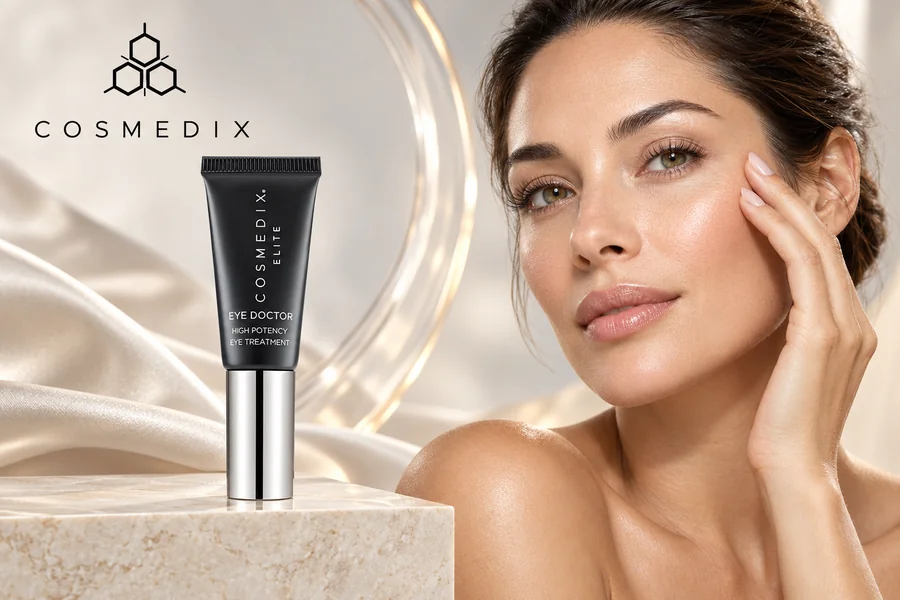
A product such as Eye Doctor / targeted Vitamin A combines microencapsulated retinol with liquid crystal technology. This is a delivery system that carries actives into the skin while topping up moisture. The base matters nearly as much as the retinol does; Vitamin A without hydration is just a quicker route to a flaky eyelid.
When to put it away
No retinol after professional treatments like peels, lasers, or microneedling, for anyone, regardless of skin type. Your skin professional sets the restart date, and it’s often later than you’d like.
Are you pregnant or breastfeeding? Check with a physician first.
Same for eczema or dermatitis on the lids, recent eye surgery, or any ongoing eye condition (an ophthalmologist gets the final say). The American Academy of Ophthalmology is a reliable source to read up on eye health generally.
What progress looks like
Hydration comes first, sometimes within a few weeks. Skin looks plumper once its moisture improves. Lines become less pronounced. Give it a couple of months before judging, and expect softening rather than erasing.
Then there’s the money part: dedicated eye treatments cost more per ounce than a face serum. If the budget’s tight, daily sunscreen and a decent moisturizer will protect more of that skin than retinol ever will.
Vitamin A fine-tunes things, but sunscreen does the heavy lifting.
Back to the treatment bed
The question wasn’t really whether retinol around the eyes is permitted. Clients want a plan.
Calm the barrier and pick a formula made for thin skin. A pinhead’s worth along the bone at night, and sunscreen by day. Finally, hands off after procedures. Talk to your aesthetician, as it costs far less than the redness that comes from guessing through the whole thing.
If there’s a risk worth worrying about, it isn’t the ingredient. Hurrying, piling it onto a worn-out barrier, or borrowing a face product for a job it wasn’t built for are the real concerns.
Keep the routine dull and let your skin say when it’s ready for more. If you can, book ten minutes with a skin professional who can look at the area in person.