
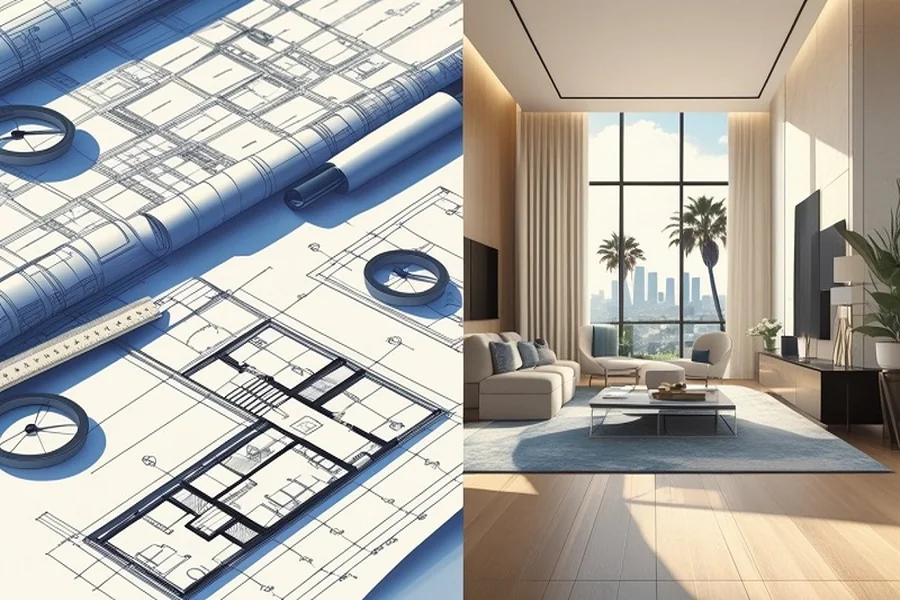
Planning a home remodel in Los Angeles involves coordinating countless decisions, from initial layout concepts to final material selections. Working with experienced LA remodeling professionals ensures that every phase of the project—from floorplans through finishes—receives expert attention and proper execution. The city’s unique permitting requirements, design preferences, and construction standards make local expertise particularly valuable.
Los Angeles homeowners face specific challenges during renovation projects. The region’s architectural diversity ranges from Spanish Revival to modern minimalist, requiring contractors who understand various design styles. Local experts also navigate LA’s complex permitting processes and building codes while sourcing materials suited to Southern California’s climate and lifestyle.
Professional remodeling teams coordinate multiple aspects of construction that homeowners rarely see. Design professionals create functional layouts, project managers handle permits and inspections, and skilled builders execute the work while maintaining quality standards. This comprehensive approach transforms initial concepts into completed spaces with carefully selected finishes and fixtures.
Expert Guidance from Floorplans to Finishes in Los Angeles
Professional guidance through the design and construction process ensures Los Angeles homeowners make informed decisions from initial blueprints through final material selections. Local experts provide structured frameworks for understanding spatial planning, customizing layouts, and securing competitive pricing throughout the project.
Understanding Floor Plans and Blueprints
Floor plans serve as the foundational documents that translate design concepts into buildable specifications. These technical drawings show room dimensions, wall placements, door swings, and window locations in a scaled overhead view.
Blueprints expand on basic floor plans by including structural details, electrical layouts, plumbing routes, and HVAC systems. They provide the complete set of instructions contractors need for new construction projects. Reading these documents requires understanding standard architectural symbols and measurement conventions.
Los Angeles design professionals help homeowners interpret these technical drawings and visualize how spaces will function in daily life. Some showrooms offer full-scale projections that allow clients to walk through their plans before construction begins. This approach identifies potential layout issues early when changes cost less to implement.
The relationship between square footage shown on floor plans and actual livable space varies based on wall thickness, structural elements, and design efficiency. Experienced designers optimize layouts to maximize usable area within the footprint.
Customizing House Plans for Your Lifestyle
Stock house plans provide starting points that require modification to suit specific sites and personal needs. Los Angeles properties often present unique challenges including hillside topography, narrow lots, and strict zoning requirements.
Design professionals adapt standard plans to accommodate how families actually live. This includes adjusting room sizes, adding or removing spaces, and reconfiguring traffic flow patterns. Kitchen placement, bedroom separation, and indoor-outdoor connections receive particular attention in Southern California designs.
Customization also addresses site-specific conditions like view orientations, privacy concerns, and natural light patterns. The process typically involves several revision rounds to refine the layout before finalizing blueprints.
Local experts understand Los Angeles building codes and permit requirements that affect plan modifications. They identify what changes require structural engineering review versus simple architectural adjustments.
Best Price Guarantee and Value Assurance
Some Los Angeles floor plan services offer pricing guarantees to provide cost certainty during the design phase. These commitments typically apply to the drafting services rather than construction costs, which fluctuate based on materials and labor.
Value assurance comes from working with professionals who understand local market rates and can identify when quotes exceed reasonable ranges. They help allocate budgets appropriately across design, permitting, and construction phases.
Design decisions made during the floor plan stage directly impact final project costs. Room sizes, ceiling heights, structural complexity, and finish specifications all drive budget requirements. Experienced designers provide transparent cost implications for different options.
Quality floor plans reduce expensive field changes during construction by resolving design issues on paper. This upfront investment typically saves money compared to addressing problems during the building phase when modifications require demolition and rework.
Comprehensive Project Execution and Interior Finishes
Successful home building in Los Angeles requires synchronized planning across structural, electrical, and design elements, with each phase building toward a cohesive finished space. Expert contractors coordinate foundation work, utility systems, interior aesthetics, and premium surface selections through structured project management that maintains quality standards from groundwork to final installation.
Foundation Plans and Structural Integrity
Foundation plans establish the structural framework that supports every subsequent construction phase. Engineers design these plans to account for Los Angeles soil conditions, seismic requirements, and load-bearing specifications that comply with California building codes.
The foundation type depends on site characteristics and building design. Slab foundations work well for level lots, while hillside properties often require stepped footings or caisson systems. Contractors verify soil compaction, rebar placement, and concrete strength before pouring.
Structural integrity extends beyond the foundation to include framing, load-bearing walls, and roof systems. Licensed structural engineers review plans to ensure proper weight distribution and lateral support. Inspections occur at critical stages to confirm compliance before walls are closed.
Detailed Electrical and Utility Planning
Electrical plans map the complete power distribution system throughout the home. Licensed electricians design circuits for lighting, appliances, HVAC systems, and specialized equipment while calculating load requirements for the main service panel.
Modern homes in Los Angeles require strategic placement of outlets, switches, and dedicated circuits. Kitchen appliances need 240-volt lines, home offices require surge-protected circuits, and outdoor spaces need GFCI-protected outlets. Smart home infrastructure integrates at this stage, including network cabling and control system wiring.
Utility planning encompasses plumbing, gas lines, and ventilation systems. Plumbers coordinate waste lines, water supply routes, and fixture locations with the architectural design. HVAC contractors plan ductwork paths that maintain energy efficiency without compromising interior ceiling heights.
Integrated Interior Design Choices
Interior design decisions affect both aesthetics and functionality across every room. Designers select materials, finishes, and fixtures that align with the client’s vision while meeting practical requirements for durability and maintenance.
Color palettes, flooring materials, and lighting fixtures create visual continuity. Hardwood, tile, or luxury vinyl flooring options each offer distinct benefits for different spaces. Built-in cabinetry, crown molding, and custom millwork add architectural character.
Project management coordinates the procurement and installation timeline for all interior elements. Contractors schedule trades in proper sequence—drywall, painting, flooring, trim work, and fixture installation. Quality control checks verify that finishes meet specifications before moving to subsequent phases.
Refined Countertops and Bathroom Enhancements
Countertops serve as focal points in kitchens and bathrooms while providing essential work surfaces. Materials range from granite and quartz to marble and quartzite, each offering different patterns, durability characteristics, and maintenance requirements.
Quartz countertops resist staining and require minimal upkeep, making them practical for busy kitchens. Natural stone options like marble provide distinctive veining but need periodic sealing. Edge profiles, backsplash integration, and sink cutouts require precise templating and fabrication.
Bathroom remodel projects elevate daily routines through thoughtful material selection and layout optimization. Custom vanities, frameless glass enclosures, and high-end tile work transform standard bathrooms into spa-like retreats. Heated floors, rainfall showerheads, and vessel sinks add luxury touches. Proper waterproofing behind tile and around fixtures prevents moisture damage that could compromise the installation.