
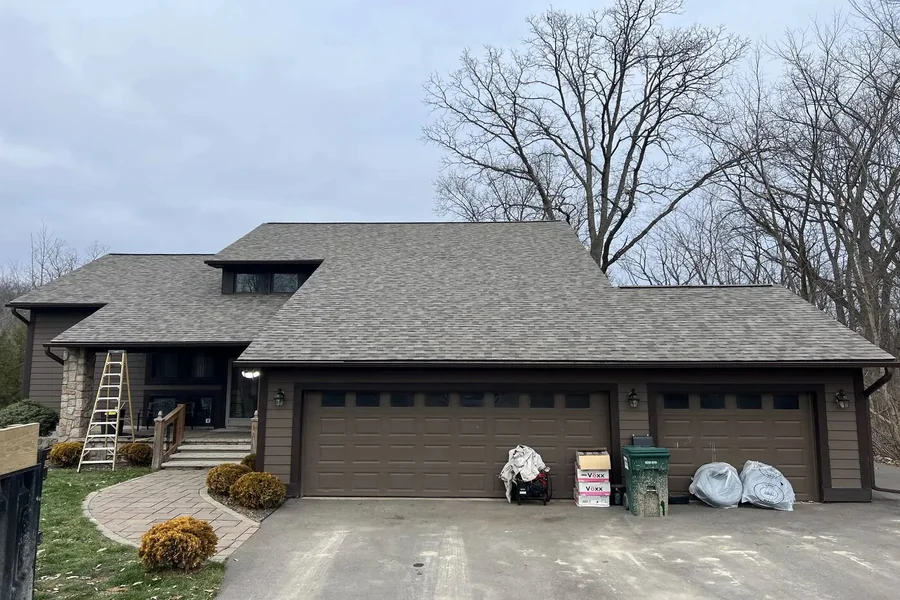
Your neighbor’s roof looks exactly like yours. Same shingles, same color, same age. That tells you nothing about whether your roof took a hit last June, and it’s the reason so many Michigan homeowners wait two years too long to call anyone.
Storms don’t register on a neighborhood scale. They register on a roof-by-roof scale, sometimes a slope-by-slope scale. What damaged your south-facing plane can leave the north side untouched, and both look identical from the street. So the goal isn’t to compare your roof to anyone else’s. It’s to build a record, understand what your policy actually covers, and get a repair done before the next freeze turns a bruised shingle into a leak in your ceiling. This guide walks through that in the order you need it.
Why Michigan Roofs Get Hit More Than You Think
Michigan sits in a corridor where warm Gulf air collides with cold Canadian air, and that collision produces hail and straight-line wind with real regularity. The National Weather Service keeps the running record of these events, and the pattern is steady rather than dramatic. You don’t need a tornado to wreck a roof. You need 90 seconds of quarter-size hail, or 60 mph wind that flexes the deck just enough to crack the sealant strip under a shingle.
That’s the part people miss. Hail damage to asphalt shingles often shows up as a bruise, not a hole. The mat underneath cracks, granule loss follows, and the shingle keeps looking fine for a season or two. Wind damage is sneakier still. It lifts edges, breaks seal bonds, and lets water wick in during the next rain. Neither shows up as an obvious hole from your driveway.
I’d rather see a homeowner file a claim they end up not needing than skip an inspection and discover a soft deck when they go to sell the house. That’s my bias, and I’ll own it.
What to Do in the First 48 Hours
The instinct after a storm is to call somebody immediately. Fight it for one afternoon. What you need first is a record, and it’s much easier to build before crews start showing up in your driveway.
Walk your property with your phone and shoot wide, then close. Wide shots show the whole roof and the surrounding trees. Close shots show individual shingles, dents in your gutters, dings in the window screens, and anything that landed on the AC condenser outside. Date the photos.
Then write down what you heard and saw. Hail on the ground, the time the wind peaked, which direction the weather came from. That timeline matters, and it’s the thing people forget within a week. Ready.gov frames this as your own damage record, separate from whatever the insurance company collects, and it’s sound advice for exactly this reason: your memory is the only evidence that decays on its own.
- Photograph the roof from the ground with zoom, plus any gutters, downspouts, and window screens.
- Photograph anything that hit the ground, like hail, branches, or roof granules washed into your lawn.
- Save the date, approximate time, and a two-sentence description of the weather.
- Write down the name of anyone who comes to your door offering to inspect the roof that day.
Tarp the roof only if you can see an actual opening. Michigan law generally gives you a limited window to file suit under your own property policy, and that clock runs from the date of loss, not the date of denial. Filing early protects you while you sort out the rest. And here’s my firm opinion: never sign anything handed to you by someone who knocked on your door uninvited. Read your policy before you sign anything at all.
The Storm Damage Test: Telling Impact Apart From Age
This is the judgment call that decides whether a claim is worth filing, and it’s where a proper report earns its keep. Insurers pay for sudden, accidental damage. They don’t pay for a roof that’s simply worn out. An adjuster’s first question is going to be which one you have.
| What you see | What caused it | Claim outlook
|
| Random dark bruises, granule loss at the points | Hail impact | Strong, especially with dates and photos |
| Lifted or creased shingles on one side of the roof only | Straight-line wind | Strong, and more common than you think |
| Consistent granule loss across the whole roof | Age | Not a storm claim |
| Granules in the gutters, no impact marks | Progressive aging | Maintenance issue |
| Dents in gutters or AC fins with no shingle marks | Hail, size-dependent | Worth inspecting closely |
Nobody gets this right on the first try. I’ve watched homeowners call hail damage “wear” because the shingles weren’t torn, and I’ve watched them call worn shingles “damage” because they were scared. Both mistakes cost you. One leaves a breakable roof standing under snow load. The other puts a claim on your record that won’t pay out.
How to Prep for the Insurance Conversation
Get an inspection before you call your insurer, not after. You want to know what you have before you tell anyone it’s damaged, because a claim on your policy is a permanent data point in your history, and you can’t un-ring that bell.
When you do file, the words you use matter less than what you hand over. Dates. Photos. Notes. A statement about which slopes face the weather and which don’t. If the roof is old, say so before they find out. Adjusters deal with this every week, and the homeowners who get the straightest answers are the ones who show up organized.
Keep the inspection report and the photos together. If you get a denial, you’ll want them for a second review. And if you ever need serious help after an event, the process mirrors the recovery guidance in FEMA’s own emergency materials, where documenting loss and keeping your paperwork in order is step one. The paperwork is the job. The repair comes after.
Repairs, Replacements, and Michigan Timing
Small damage gets a spot repair. Loose or lifted shingles get re-sealed or replaced on the spot. But when hail has bruised multiple slopes, spot repairs are a losing game, because the shingle you replace will outlast the ones next to it and the deck underneath is where the real problem sits.
Then there’s the clock barely anyone thinks about. Freeze and thaw cycles work on water the way a chisel works on stone. Water that gets into a small crack in October expands in January and finds a path to your drywall by March. Spring is also the busiest season for roofing crews in this state, and the good ones book out. If you’re looking at a damaged roof in September, waiting until April means waiting through a winter and then waiting in a longer line.
If you’d rather hand the documenting, the report, and the back-and-forth with the adjuster to people who do it every week, that’s a reasonable call. One option worth looking at is On Top Roofing for storm damage repair in Howell, which is built around exactly that sequence: inspection, documented report, and claim support from the first call through the final walkthrough. I’d still take your own photos regardless. You should never be the only party in the conversation without a file.
Your First Three Calls
Start with your own camera, not your phone’s contact list. Second call goes to a roofer who inspects before anyone mentions a claim, because a report you can hold is worth more than a verbal opinion. Third call is your insurer, made only once you know what you’re reporting.
If the roof is fine, you’ve spent an hour and a little worry, and you get to skip the whole thing. If it isn’t, you’ve protected yourself before the first frost. Which one are you going to find out the hard way?