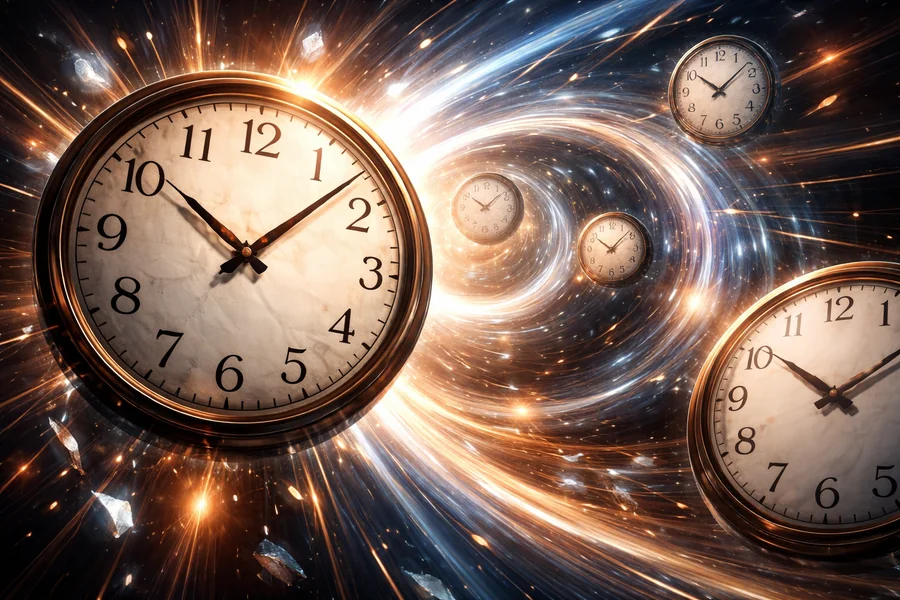
The countdown clock can do something very powerful – it makes time visible. In normal circumstances, 5 minutes equals 5 minutes. But if you set the timer to “04:59” and put it on a screen, every second has a purpose. From limited-time offers, ticket releases, challenges, and live events to sped-up game action like Grana Win Brazil, you see the effect across all aspects of digital life. It’s less about the psychology of the activity itself. It’s what happens when the brain sees a resource that’s continuously being taken away.
If you’ve worked in a high-tech digital setting, this recognition may be even more familiar. Uncertainty, live information, and a changing clock can be a powerful trio for grabbing people’s attention, their interest, and urgency. One might wonder why this simple numerical display makes otherwise dull minutes more valuable.
When Time Stops Being Background Information
People often aren’t aware of every minute that passes. A clock tells us the time, but most of the time we don’t look at the numbers when making our day-to-day decisions.
A countdown, by contrast, is not the same. It makes time visible as a part of the information. The time now reads “10:00 remaining.” Then it becomes “09:59,” “09:58,” and so on. The changing display continually re-visualizes the resource’s availability.
This is related to the subjective sense of time. Physical time proceeds at an even pace, but psychological time may not. A few minutes while waiting for a most important message can seem like two hours; a couple of hours of fun can be experienced in a matter of seconds.
Countdowns play on this disparity by giving attention a target.
What is left is a form of temporal salience, making the remaining time hard to ignore.
Why Does the Brain Pay More Attention to the Clock?
A countdown is also an attention machine.
Each switching number gives new data. A message might be static; a timer will constantly change. That movement promotes further monitoring.
There are several psychological processes which may be engaged:
- The timer is always noticeable because of attention capture.
- Cognitive load increases when the person is double-checking time while making another decision.
- The closer the endpoint approaches, the more arousal may be increased.
- When the goals are near, they seem more relevant to finish or expire.
- A temporal focus of attention focuses on the interval that remains.
So the brain is basically saying, “Something is going on and you should continue to watch.”
Not all countdowns are stressful. Excitement can come from having a timer before a favorite event. A cooking timer can help you focus. You can add a game timer to a simple online sportsbook to add an element of challenge.
The same mechanism can create motivation, anticipation, anxiety, or urgency, depending on the context.
The Internal Clock Is Not a Perfect Clock
No, people don’t have a small timepiece behind their foreheads for measuring time. Subjective timing relates to attention, emotion, arousal, memory, and other neural processes.
One set of theories that influenced the field of timing involves an internal accumulation process: the brain uses neural activity to accumulate temporal information, not just the objective seconds from an external clock. This also explains why the same interval can sound so different in different situations.
If people are actively involved, time can pass by. If they are bored, a minute can feel like an agony. If important events are about to occur, attention may focus on how much time is left.
Countdown clocks make this process even more pronounced because they make temporal change visible. In the interface, instead of asking the user to guess the remaining time, it simply tells the user how much time is left.This can make time pass more quickly.
Digital Environments Make Time Behavioral.
Modern interfaces rarely use clocks to show time. They employ time in behavioral design.
Think about some of the common ones:
Flash Sales
An offer could be scheduled to expire, for example, on August 8, 2023, 8:42:17.An offer could be shared on a product page as ending at 8:42:17 on August 8, 2023.
The number feels more urgent than the words “limited time” because it gives scarcity a measurable boundary.
Ticket and Booking Systems
A reservation can be briefly displayed while a countdown plays to show how much time the user has to act.
Time becomes part of the interface.
Games
Countdowns and points, levels, rankings, challenges, and rewards are common elements of games.
This creates a tight behavioral environment with instant gratification, competition, progress tracking, and varying rewards.
Live Digital Platforms
When users feel like waiting has repercussions, real-time statistics and changing information can make them feel that way. A minute is not just a minute; it’s a chance to watch, act, compare, or choose. It’s familiar ground for viewers used to a fast-paced digital world.