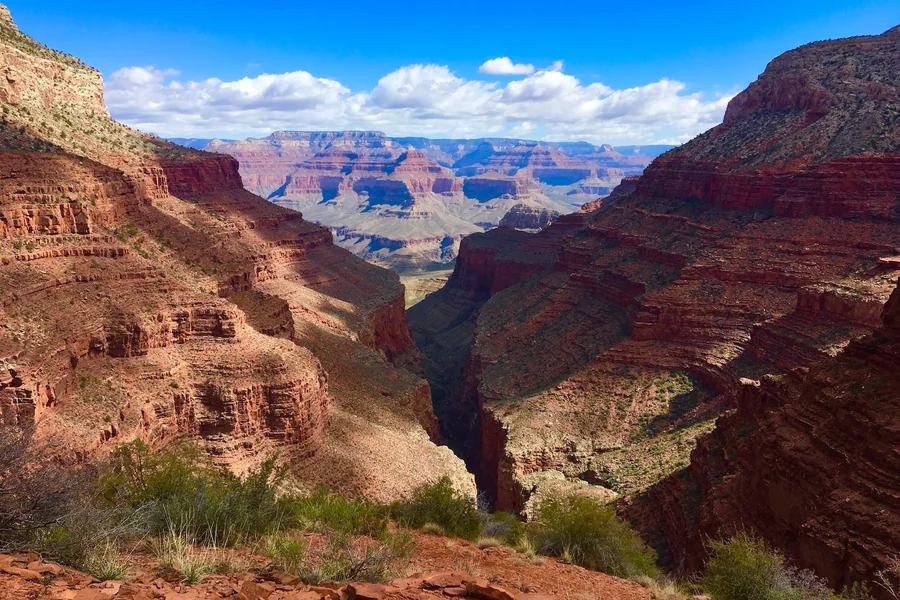
Seven people. Ages 4 to 74. One canyon. That was my family’s spring break last year, and by the time we hit the second viewpoint, my dad wanted a bench, my nephew wanted a cliff, and my sister wanted a coffee. The trip still worked because we stopped treating the Grand Canyon like a single activity.
Here’s the promise: you can build one itinerary that keeps all ages fed, rested, and interested without splitting the group into separate cars. You just have to plan around energy instead of around landmarks, and you’ll want one segment where nobody has to drive or navigate at all. That’s what this guide covers.
Start With the Question Nobody Asks
Which version of the Grand Canyon does your group actually want? Not which viewpoint, which version. There are three. The photo version is a two-hour loop of rim stops with short walks between them. The hike version covers real mileage below the rim and eats a whole day. The story version is sitting still while someone explains what you’re looking at.
Most groups contain fans of all three and never say so out loud, which is how vacations turn into quiet resentment. Ask each person one question the week before you go: do you want to look, move, or learn? Write the answers down. If more than half say “look,” you’re planning a driving day, and every hike suggestion from that point forward is a detour you should skip.
Match the Day’s Shape to the Slowest Person, Not the Fastest
This is the rule I’d tattoo on every rental car dashboard. Fast people recover from boredom. Tired people don’t recover from exhaustion, and one worn-out traveler can pull the whole group home early. So build the day around whoever has the least stamina, then add an optional harder layer on top.
Two adults can peel off for a longer rim trail walk while the others hold a table at the lodge, and everyone reunites for the next stop. That structure beats a rigid schedule every time because it gives the high-energy people an escape valve and the low-energy people a guaranteed rest.
Timing matters here. According to the National Park Service, Grand Canyon is a high-elevation desert where summer heat and sudden storms are both real concerns, which is why you want your slowest-paced activities in the mild early hours and your sitting-and-listening activities in the afternoon.
A Sample Rhythm That Handles Four Energy Levels
Here’s the shape I’d use for a mixed-age group with one full day at the South Rim. You can shift the clock; you can’t skip the pacing logic.
- Early morning, 7 to 9 am. One or two viewpoints with paved, flat paths. Short walks only. Coffee and breakfast after, not before. Hunger makes tired people cranky.
- Mid-morning, 9 am to noon. The energetic half walks a rim trail segment. The other half stays somewhere with shade and seating. Set an exact meeting time, not “when we’re done.”
- Long lunch, indoors or under shade. This is your rest block. Protect it. It’s the hinge the whole day swings on.
- A guided or driven segment where the group stays together and nobody navigates. This is where the day’s stories get made.
- One final viewpoint or none at all. Sunset sounds romantic until you remember the drive back in the dark with a tired four-year-old.
Notice what’s missing: any attempt to do everything. Groups that try to hit every named overlook end the day with four photos and zero memories.
Why the Together Segment Should Be a Driven Tour
Every group trip needs one stretch where nobody’s decision-making. The driver isn’t stressed about parking. The planner isn’t fielding questions about the map. The restless teenager is being entertained by something other than a phone. When you book a private grand canyon hummer tour, you get the whole vehicle to yourselves, which means your group sets the temperature, the pace, and the snack rules.
A guide handles the navigation and the narration, so the tired people sit and the curious people ask questions, all in the same vehicle. That togetherness piece matters more than people expect. On a bus full of strangers, your group scatters into separate seats and separate moods. In a vehicle you control, the trip stays one trip.
What to Bring, Judged by Age and Attitude
Forget the generic packing list. Here’s what actually earns its space when your group spans four generations.
- Layers for everyone, including the teenager who insists he’s fine. The National Weather Service treats the high country as its own climate zone, and mornings at the rim feel nothing like noon.
- Flat, sturdy shoes for the walkers. Rim paths are uneven in ways sneaker marketing photos never show.
- Water for the person who always says he isn’t thirsty. He’s the one who’ll get quiet and gray-faced at 2 pm.
- Photo ID for every adult. Leave it in the bag until you need it.
- A designated photographer rotation. Otherwise one person spends the entire day behind a screen and sees nothing.
And pack patience for the reality that someone will complain. That’s not a failed trip. That’s a family in a canyon.
The One Planning Rule That Saves the Day
Book the fixed-time element first, then build everything else around it. If you’re doing a guided drive, that slot becomes your anchor and the morning walk becomes optional. If you’re doing a ranger talk, same logic. Free-floating itineraries collapse the moment one person needs a nap, and someone always needs a nap.
According to the Department of the Interior, public lands draw hundreds of millions of visits a year, and the canyon sits near the top of the list. Crowds are a planning variable, not a surprise. Fixed bookings give you a spine for the day when the parking lots are full.
What I’d Do Differently Next Time
My family’s mistake was front-loading ambition. We tried to squeeze a sunrise, a trail, and a scenic drive into one day, and the drive got rushed because the trail ran long. Next time I’d cut the trail entirely, book the guided drive for the afternoon, and let the morning be slow. Genuinely slow. Coffee, one viewpoint, nobody checking a watch.
The canyon isn’t going anywhere. Your group’s energy, though, is a limited resource that refills overnight and drains by mid-afternoon. Plan like that’s true, and you’ll come home with everyone still speaking to each other. So before you book a single reservation: who in your group will need the most rest, and which segment of your day are you willing to shrink to give it to them? Answer honestly, and the rest of the itinerary almost writes itself.